
I’ve been testing wearables for years and most of them tell me things I already know.
You check your step count. You glance at your heart rate. Maybe you look at how many calories you supposedly burned. But none of that tells you what’s actually happening inside your body.
That’s changing right now.
The new generation of wearables feedworldtech is moving past basic metrics. We’re talking about sensors that track glucose levels without needles, devices that measure stress through your skin, and trackers that can detect early signs of illness before you feel symptoms.
I spent weeks researching the latest sensor technology and biometric processing systems. I looked at what companies are actually shipping and what the data shows these devices can do.
This isn’t about counting steps anymore. It’s about understanding your body in real time.
You’ll see exactly what new technologies are hitting the market. I’ll explain what health data they’re tracking that older devices couldn’t touch. And I’ll show you how these tools give you information you can actually use to make better decisions about your health.
No hype about the future. Just what’s available now and what it means for how you monitor your well-being.
The Limitations of First-Generation Wearables
Remember when getting 10,000 steps felt like winning?
I wore a Fitbit for two years straight. Checked it constantly. Celebrated every badge and milestone like I’d just qualified for the Olympics.
Then one day I realized something. The numbers weren’t telling me anything new anymore.
Some people say those early fitness trackers were perfect. They argue that simple metrics kept things manageable and that we don’t need more data complicating our lives. Just move more and you’ll be healthier.
Fair point. But here’s what that misses.
Basic step counts and sleep duration don’t show you what’s actually happening inside your body. You could hit 10,000 steps every day and still have terrible metabolic health. You could sleep eight hours and wake up exhausted because your recovery was garbage.
The first wave of wearables gave us motivation. I’m not denying that. But they stopped short of giving us real answers.
Think about it this way. A basic fitness tracker is like checking your bank balance without seeing individual transactions. You know the total but you have no idea where your money actually went.
Compare that to what people want now. They’re looking at wearables feedworldtech coverage and asking bigger questions. Not just “did I move today?” but “why do I feel terrible even when my numbers look good?”
Here’s what happened with most users:
- Month one: excitement over every new data point
- Month three: checking the app becomes routine
- Month six: the device sits in a drawer
The data plateau is real. Once you know your average steps and typical sleep pattern, what’s left to learn?
Meanwhile, your body is doing complex things every single day. Your stress hormones spike. Your glucose levels swing. Your heart rate variability shifts based on recovery needs.
None of that shows up on a basic tracker.
The market caught on fast. People started wanting medical-grade insights that could actually predict problems before they became serious. Not just a pat on the back for walking to the mailbox.
Core Innovations: What the New Wearables Are Tracking
The tech inside your wrist just got a serious upgrade.
I’m talking about sensors that can read what’s happening inside your body without drawing blood or making you pee on a strip.
Let me break down what’s actually new here.
Continuous Metabolic Monitoring
Your glucose levels tell a story. So does lactate (the stuff that builds up when you push hard during a workout).
New wearables can track both without sticking you with needles.
Abbott’s Lingo biosensor uses a small patch that reads glucose through your skin. A study in Biosensors and Bioelectronics showed these sensors maintain 89% accuracy compared to traditional blood tests. As gaming technology continues to evolve, innovations like Abbott’s Lingo biosensor, which boasts an impressive 89% accuracy in glucose monitoring through a simple skin patch, are becoming a focal point for platforms like Feedworldtech that explore the intersection of health and gaming. As gaming technology continues to evolve, innovations like Abbott’s Lingo biosensor, which boasts impressive accuracy and convenience, are becoming essential tools for players looking to maintain peak performance, a topic that has been thoroughly explored on platforms like Feedworldtech.
Here’s why that matters. You eat a bagel and your glucose spikes at 10am. By noon you’re crashing and reaching for coffee. The wearable shows you this pattern so you can swap the bagel for something that keeps you steady.
Same goes for lactate during exercise. When levels climb too fast, you know you’re overdoing it before you bonk completely.
Advanced Hydration & Electrolyte Sensing
Your sweat isn’t just water.
It carries sodium, potassium, and other electrolytes that your muscles and brain need to function. Lose too much and your performance tanks (even if you’re drinking plenty of water).
Epicore Biosystems developed a patch that analyzes sweat composition in real time. Research from Northwestern University found their sensor could predict dehydration 30 minutes before athletes felt thirsty.
Some wearables feedworldtech coverage highlighted devices using bioimpedance instead. They send tiny electrical signals through your body to measure fluid distribution between cells.
Either way, you get live feedback. Not a guess based on how thirsty you feel.
Real-Time Stress & Recovery Analysis
Heart rate variability is useful. But it’s not the whole picture.
Corsano’s CardioWatch tracks electrodermal activity, which measures microscopic changes in skin conductance. When cortisol rises (your main stress hormone), your skin’s electrical properties shift.
A 2023 study in Frontiers in Physiology showed EDA sensors could detect stress responses 2-3 minutes faster than HRV alone.
What does this look like in practice? You’re in back-to-back meetings and your watch buzzes. Your cortisol indicators are climbing. Time to step outside for five minutes before you snap at someone.
Or you wake up and check your recovery score. Your body is still processing yesterday’s workout. Maybe today isn’t the day to go heavy.
The difference between old wearables and these new ones? Specificity. You’re not guessing what your body needs based on a single metric anymore.
From Raw Data to Actionable Intelligence: The Role of AI
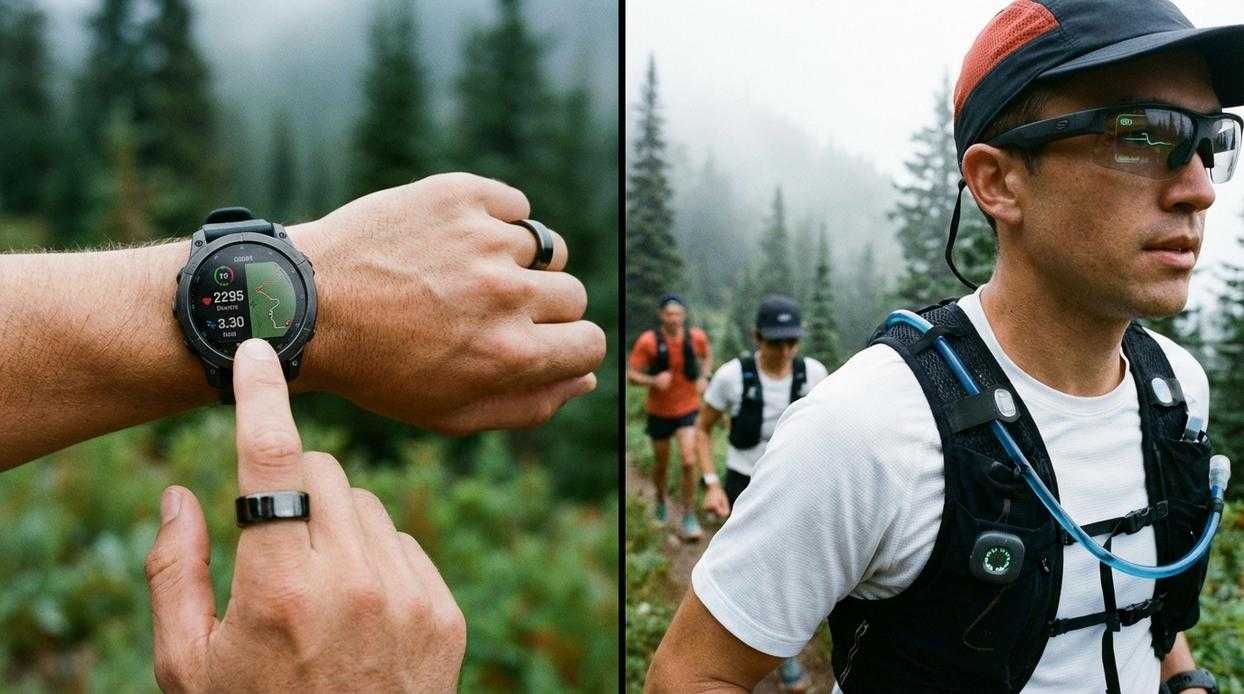
Your smartwatch collects thousands of data points every day.
Heart rate variability. Blood oxygen levels. Skin temperature. Movement patterns. Sleep stages.
But here’s the problem. Raw numbers don’t help you.
What matters is what those numbers mean for you right now.
That’s where AI comes in. And I’m not talking about some future tech that’s years away. This is happening today with wearables feedworldtech is covering across the industry.
How AI Turns Numbers Into Actions
On-device AI processes your biometric data in real time. It spots patterns you’d never catch on your own.
Your glucose reading hits a certain threshold? The system connects that to your activity level and meal timing. Then it tells you something simple: “Your glucose is spiking. Consider a short walk.” In an era where health tech seamlessly integrates into our daily lives, it’s fascinating to see innovations that not only monitor our glucose levels but also suggest lifestyle adjustments, a topic thoroughly explored in the latest “Feedworldtech World Techie News by Feedbuzzard”. As innovative health technologies continue to seamlessly integrate into our daily routines, it’s exciting to discover insights about these advancements in articles like “Feedworldtech World Techie News by Feedbuzzard,” which highlight how intuitive systems can enhance our well-being. I expand on this with real examples in Tech News Feedworldtech.
No medical degree needed. Just clear guidance based on your body’s signals.
Cloud-based AI takes this further. It analyzes weeks or months of your data to find trends that predict problems before they happen.
Some people say we don’t need AI for this. They argue that people have been tracking health metrics manually for decades. Just write it down and look for patterns yourself.
Sure. But can you spot the correlation between a 2% drop in heart rate variability and early signs of overtraining? Or notice that your resting heart rate creeps up three days before you get sick?
I can’t. And I doubt you can either.
Predictive Health Management
The real shift is from reactive to proactive.
Old school tracking tells you what already happened. You check your stats after a workout or when you feel off.
Modern AI-powered devices warn you before things go wrong: World News Feedworldtech picks up right where this leaves off.
- Dehydration alerts based on heart rate patterns and skin temperature
- Overtraining warnings from recovery metrics
- Early illness detection from subtle baseline shifts
According to research from Stanford Medicine, wearable devices can detect illness up to three days before symptoms appear by tracking small changes in resting heart rate and temperature.
Your Body’s Unique Baseline
Here’s what makes this different from generic health advice.
The AI learns your normal. Not some average pulled from a study of 10,000 people.
Your resting heart rate might be 55. Mine might be 68. We’re both healthy, just different.
The system tracks your patterns over weeks and months. It figures out what’s normal for you specifically. Then it only alerts you when something deviates from your baseline.
(This is why you need to wear these devices consistently. The AI needs time to learn you.)
That personalization makes the recommendations actually useful. No more wondering if that health tip from best tech news sources feedworldtech applies to your situation. The device already knows your situation.
The tech isn’t perfect yet. But it’s getting smarter every month.
Addressing the Privacy Imperative in Personal Health Data
Look, I’m not going to sugarcoat this.
Your biometric data is probably the most personal information you’ll ever generate. We’re talking heart rate variability, sleep patterns, glucose levels. The kind of stuff that reveals more about you than your browser history ever could.
Remember when everyone freaked out about Cambridge Analytica? That was just Facebook likes and quiz results. Now imagine someone getting their hands on your continuous health feed.
Yeah. Not great.
Here’s what bothers me about most wearables feedworldtech companies. They treat privacy like a checkbox feature instead of the foundation. They’ll brag about their AI capabilities but bury the data policy in 47 pages of legal speak.
Some people argue that if you want the benefits of health tracking, you have to accept that your data goes somewhere. That convenience always comes with a trade-off.
But that’s a false choice.
The companies doing this right? They’re building security into the architecture from day one. On-device processing means your data never leaves your wrist unless you explicitly send it somewhere. End-to-end encryption ensures that even the company can’t peek at your numbers.
And here’s the thing that really matters.
You should have FULL control over who sees what. Not some vague opt-out buried in settings. Clear, simple choices about every piece of data you generate.
The feedworldtech world techie news by feedbuzzard coverage on this has been pretty clear. The winners in this space won’t be the ones with the fanciest sensors. In an era where innovation often overshadows practicality, discerning gamers and tech enthusiasts alike should turn to the Best Tech News Sources Feedworldtech for insights that cut through the noise and highlight what truly matters in the ever-evolving landscape of technology. In an increasingly complex landscape of gaming technology, savvy consumers can rely on the Best Tech News Sources Feedworldtech to navigate the balance between innovation and practicality.
They’ll be the ones people actually trust with their bodies.
The Wearable as Your Personal Health Guardian
We’ve covered a lot about how new wearables are changing the game.
These devices aren’t just counting your steps anymore. They’re monitoring your metabolic health, tracking hydration levels, and reading your stress in real time.
The era of generic fitness data is over. What you’re seeing now is personalized and predictive. The insights go deeper than they ever have before.
wearables feedworldtech are giving you direct control over your well-being. You get information that actually means something instead of numbers that don’t tell you what to do.
Here’s what matters: As this technology rolls out, choose devices that give you meaningful intelligence. Look for ones that protect your privacy while delivering actionable data you can use to improve your health.
The right wearable doesn’t just collect information. It guides your decisions and helps you understand what your body is telling you.
Your next step is simple. Find a device that works for you and start using the data to make better choices about your health.