
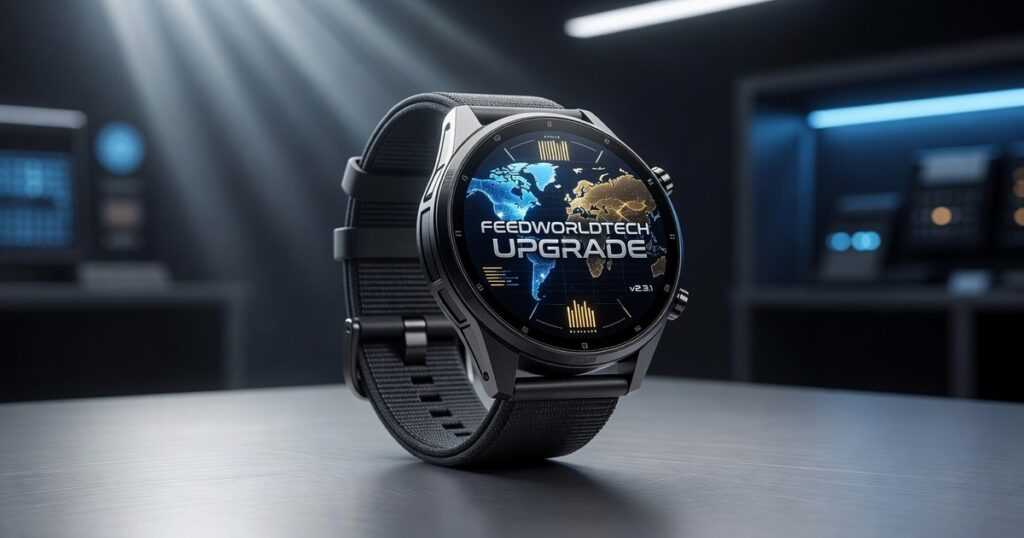
I’ve tested dozens of wearables over the past two years and most updates feel like reruns.
You’re probably tired of seeing “new” smartwatches that just add another fitness metric or change the band color. That’s not what this is about.
We’re at a turning point with wearable upgrade feedworldtech. The sensors are different now. The form factors are changing. And some of these shifts actually matter for how you track your health and get through your day.
I spend most of my time analyzing digital infrastructure and emerging tech. That means I look past the marketing and focus on what’s actually new under the hood.
This article walks you through the real upgrades happening right now. Not the incremental stuff. The foundational changes that separate genuine breakthroughs from repackaged features.
You’ll see which health sensors are worth paying attention to, what new form factors are coming, and which features actually improve your daily routine instead of just cluttering your wrist.
No hype. Just what’s changed and what it means for your next purchase.
Beyond the Wrist: The Expansion into Smart Rings and Intelligent Apparel
Wearables used to mean one thing.
A watch on your wrist.
But that’s changing fast. And honestly, it’s about time.
Here’s what’s happening. Sensors are getting smaller. Way smaller. We’re talking about the same tech that used to need a chunky watch face now fitting into a ring the size of your wedding band.
This shift matters because not everyone wants to wear a smartwatch 24/7. I don’t care how sleek the design is. Sometimes you just want your wrist free.
Smart rings are leading this charge.
They’re comfortable enough to forget you’re wearing them. That’s the whole point. You need something you can keep on while you sleep if you want accurate recovery data (and trust me, sleep tracking is where the real insights live).
Modern smart rings pack in temperature sensing, heart rate variability, and blood oxygen monitoring. All in a device that weighs less than a nickel.
Some people argue that rings can’t match the screen real-time feedback of watches. Fair point. But here’s what they’re missing: you don’t always need a screen. Sometimes passive data collection beats constant notifications.
Then there’s intelligent textiles. Or e-textiles if you want the technical term.
This is where things get interesting. We’re weaving sensors directly into fabric. Your shirt becomes the monitoring device.
These fabrics can track ECG patterns, muscle exertion, and respiratory rate while you move. No chest strap. No armband. Just your regular workout gear doing double duty.
The wearable upgrade Feedworldtech represents isn’t just about new gadgets. It’s about removing friction from data collection.
Think about your workday. A watch buzzes. You check it. You get distracted. A ring or smart shirt? They collect what they need without pulling your attention away from what you’re actually doing.
That’s the real win here. Continuous monitoring that doesn’t interrupt your workflow.
The Health Revolution: Medical-Grade Sensors and Predictive AI
Your smartwatch tells you how many steps you took today.
But what if it could tell you about a heart problem three weeks before it happens?
That’s not science fiction anymore. We’re watching wearable tech shift from basic fitness tracking to something that looks a lot like preventative medicine.
Some people say this is overreach. They argue that consumer devices shouldn’t pretend to be medical equipment. That we’re creating a generation of hypochondriacs who panic over every notification.
I hear that concern. And yeah, false alarms are annoying.
But here’s what that argument misses. The gap between wellness tracking and actual health monitoring is closing fast. And for people who can’t afford regular doctor visits or live far from medical facilities, this matters. As the gap between wellness tracking and actual health monitoring continues to close, innovations from companies like Feedworldtech are becoming essential for those who face barriers to accessing traditional healthcare. As innovations like those from Feedworldtech emerge, the gap between wellness tracking and actual health monitoring is rapidly diminishing, providing crucial support for individuals who lack access to regular healthcare services.
From Counting Steps to Predicting Problems
The old model was simple. Track your heart rate during workouts. Count calories burned. Maybe monitor your sleep quality.
Now? We’re talking about sensors that can spot irregular heart rhythms with the same accuracy as hospital equipment. Non-invasive glucose monitoring that doesn’t require finger pricks. Blood pressure readings without a cuff.
The Apple Watch already detects atrial fibrillation well enough that cardiologists take the data seriously (and the FDA cleared it years ago). Multi-lead ECG capabilities that used to require a hospital visit now sit on your wrist.
AI That Actually Learns Your Body
Here’s where it gets interesting.
These devices don’t just collect data anymore. They learn what normal looks like for you specifically. The AI runs both on your device and in the cloud, analyzing patterns across thousands of data points.
Your resting heart rate creeps up by five beats per minute over two weeks? The algorithm notices. Your sleep patterns shift in ways that correlate with early illness? It flags that too.
This is what people mean by the wearable upgrade feedworldtech keeps covering. We’re moving from reactive healthcare to predictive systems that catch problems early.
The Infrastructure Nobody Talks About
But none of this works without the boring stuff.
Secure data protocols. Interoperability standards that let your wearable talk to your doctor’s systems. Privacy frameworks that protect your health information while still making it useful.
Feedworldtech has covered how these backend systems need to evolve. Because a device that predicts health issues is useless if that information can’t reach the people who can actually help you.
The tech is here. Now we’re just building the infrastructure to support it.
Powering the Future: Breakthroughs in Battery Life and Connectivity
You know what kills most wearables?
The battery.
You buy a smartwatch or fitness tracker and for the first week it’s great. Then you realize you’re charging it every single night. Sometimes twice a day if you’re actually using the features you paid for.
It gets old fast.
But here’s what’s changing. The battery problem isn’t just about making bigger batteries (which would make devices bulkier). It’s about using LESS power in the first place. World News Feedworldtech builds on the same ideas we are discussing here.
New low-power processing chips are doing exactly that. They handle the same tasks while sipping power instead of gulping it. Some wearable upgrade feedworldtech devices now run for weeks on a single charge instead of days.
The battery chemistry itself is getting better too. We’re seeing cells that hold more energy in the same space and degrade slower over time.
Here’s where it gets interesting though.
Some companies are working on energy harvesting. That’s a fancy term for devices that charge themselves from your environment. Your movement generates kinetic energy. The light around you provides solar energy. These tiny amounts add up.
We’re not talking about full charges from walking around. But enough to extend battery life or keep certain features running without ever plugging in.
Now let’s talk about connectivity.
Your wearable constantly talks to your phone. Every notification, every sync, every data transfer drains the battery. The old Bluetooth standard wasn’t built for devices that need to stay connected 24/7 while sipping power. As wearables become increasingly reliant on constant connectivity, it’s essential to stay informed about the latest innovations in battery technology, making the Best Tech News Sources Feedworldtech an invaluable resource for keeping up with these advancements. As the demands for battery life in wearables escalate, staying updated on innovations in low-power connectivity is crucial, making it essential to follow the Best Tech News Sources Feedworldtech for the latest advancements.
Bluetooth LE Audio changes that. LE stands for Low Energy (pretty straightforward naming for once). It sends audio and data while using a fraction of the power.
What does this mean for you?
Your device can maintain a constant connection without dying by lunch. It can stream what are new technologies in 2023 feedworldtech updates, sync health data, and handle calls without massacring your battery.
The combination matters more than any single breakthrough. Better chips plus better batteries plus smarter connectivity equals devices that actually last.
We’re getting close to wearables you charge once a month instead of once a day.
That’s when they stop being a hassle and start being something you just wear and forget about.
Enhancing Interaction: Next-Gen Displays and Haptic Feedback
Brighter, Smarter Displays
You know how your phone screen becomes basically useless in direct sunlight?
Wearables had that problem times ten. Tiny screens. Weak brightness. You’d have to cup your hand over your watch just to read a text.
Not anymore.
MicroLED and advanced AMOLED displays changed the game. Think of it like the difference between reading a book with a flashlight versus reading it in broad daylight. The clarity just hits different.
These screens push brightness levels that make outdoor visibility actually work. Colors pop with accuracy that older displays couldn’t touch.
But here’s the kicker. They use less power doing it.
That’s not normal in tech. Usually when something gets better, it drains your battery faster. These displays break that rule, which means your device lasts longer between charges. For the full picture, I lay it all out in World Techie News Feedworldtech.
The Nuance of Haptics
Remember when phone vibrations were just… vibrations?
Your device would buzz and you’d have no idea if it was your mom calling or just another spam email. Every alert felt the same.
Haptic engines evolved past that. Way past it.
Modern haptics work like a language your skin can read. A gentle tap on your wrist tells you to turn left. A different pattern means you got a message. Another one signals a calendar reminder.
It’s like having someone tap you on the shoulder in different ways to communicate different things. You don’t need to look. You just know.
The wearable upgrade feedworldtech community has been tracking shows this tech getting more refined every year. What started as basic buzzing now conveys actual information through touch alone.
Creating a Seamless User Experience
Here’s where it clicks together.
Better displays mean you can glance at your wrist for half a second and actually see what you need. Smarter haptics mean you often don’t need to look at all.
It’s like the difference between someone shouting across a room versus whispering directly in your ear. One disrupts everything around you. The other keeps you in the flow.
You’re in a meeting. Your wrist taps twice. You know your kid’s school just sent something. You don’t pull out your phone. You don’t break eye contact. You just know you’ll check it later. In a world where distractions are meticulously managed, the seamless integration of smart technology allows parents to stay engaged in meetings while remaining effortlessly connected to their children’s activities, prompting curiosity about insights like “What Are New Technologies in 2023 Feedworldtech” that could further enhance our daily lives. In a world where distractions are meticulously managed, understanding “What Are New Technologies in 2023 Feedworldtech” becomes essential for parents who want to stay connected without sacrificing their presence in the moment.
That’s the point of all this tech. Making devices that inform without interrupting. Tools that enhance your awareness without demanding your attention every three seconds.
For more on how tech continues reshaping our daily interactions, check out best tech news sources feedworldtech.
Your Upgraded Future: Integrating Advanced Wearables Into Your Life
You wanted to know what’s actually new in wearables.
I get it. The market is flooded with devices that all look the same. It’s hard to tell what matters and what’s just marketing noise.
We’ve covered the real advancements here: new form factors that fit your life better, proactive health monitoring that catches issues early, batteries that last, and interfaces that actually make sense.
You don’t need to guess anymore. You have a clear picture of what’s transforming wearables from basic trackers into tools that genuinely improve your health and productivity.
Here’s what to do with this information.
Look at your next wearable upgrade feedworldtech through a different lens. Ask yourself which advancement matters most to you. Maybe it’s a specific health sensor that tracks something you care about. Or maybe it’s a form factor that won’t get in your way.
Match the technology to your goals. That’s how you get a device you’ll actually use instead of one that sits in a drawer after three weeks.
The wearables that work are the ones that fit seamlessly into how you already live. Pick the features that solve real problems for you.
Your next upgrade should make your life smarter and healthier. Now you know what to look for.