

I’ve been studying agricultural feeding systems for years and the gap between old methods and what’s possible now keeps getting wider.
You’re dealing with waste. High costs. Animals that aren’t getting fed consistently. The traditional approach isn’t cutting it anymore.
Here’s the reality: the technology to fix these problems already exists. Most farms just don’t know which systems actually work.
I’ve broken down the specific hardware and software that’s making a real difference right now. Not theoretical solutions. Tools that farms are using today to cut waste and improve animal health.
feedworldtech focuses on digital infrastructure and workflow optimization. We test these systems and figure out what actually delivers results versus what just sounds good in a sales pitch.
This article covers the exact technologies you need to know about. I’ll show you which feeding systems are worth the investment and how to set them up properly.
You’ll learn about the protocols that reduce feed waste, the automation that saves labor costs, and the monitoring tools that catch problems before they hurt your operation.
No buzzwords or vague promises. Just the specific tech that’s working for farms right now.
Beyond the Trough: The Limitations of Conventional Feeding
Walk into most livestock operations and you’ll see the same thing.
Workers hauling feed buckets. Animals crowding around troughs. Piles of wasted grain scattered on the ground.
It’s been this way for decades. But that doesn’t mean it works well.
The Real Cost of Manual Feeding
Here’s what most operators don’t calculate. The actual time spent on feeding goes way beyond just filling troughs.
You’re walking to storage areas. Measuring portions (or guessing them). Hauling everything to different pens. Then cleaning up the mess afterward.
For a mid-sized operation, that’s easily 3-4 hours per day. Multiply that by labor costs and you’re looking at thousands of dollars monthly just on the feeding process itself.
Where Your Money Disappears
The waste problem is worse than you think.
- Spillage during transport and distribution
- Animals pushing feed out of troughs while competing for position
- Selective eating that leaves nutritious portions untouched
- Spoilage from overfeeding or exposure to elements
Studies from agricultural research centers show that conventional feeding methods waste between 15-20% of total feed. On a yearly budget, that’s not just a rounding error.
And here’s the part that really matters. You can’t fix what you can’t measure.
Traditional systems give you zero data. You don’t know which animals are eating less. You can’t spot health issues early when appetite drops. There’s no way to adjust portions based on actual consumption patterns.
That’s the biggest limitation of all. Without tracking capabilities like what are new technologies in 2023 feedworldtech covers, you’re essentially operating blind.
You feed. You hope. You wait to see results.
Precision Nutrition: The Power of Sensors and Data Analytics
You know how most farms still feed animals the same way they did 20 years ago?
Same rations. Same schedule. Every animal gets treated like they’re identical.
But here’s what we know now. A cow that’s just given birth needs different nutrition than one that’s six months into lactation. A pig fighting off a respiratory infection burns through protein faster than a healthy one.
Some producers say precision feeding is overkill. They argue that animals have survived just fine on standard rations for decades. Why complicate things?
Fair point. Traditional feeding works. Animals grow. They produce milk. The system functions.
But let me show you what that approach actually costs.
According to research from Wageningen University, farms using standard feeding protocols waste between 15% and 30% of their feed budget (that’s money literally going out the back end). Meanwhile, a 2023 study in the Journal of Animal Science found that precision feeding systems improved feed conversion ratios by an average of 12% across dairy and swine operations.
That’s not marginal. That’s the difference between profit and loss for most operations.
What Precision Feeding Actually Means
I’m talking about moving past the one-size-fits-all model. Instead, you’re giving each animal the right feed, in the right amount, at the right time.
Think of it like this. You wouldn’t give the same workout plan to someone training for a marathon and someone recovering from surgery. Animals are the same way.
The technology that makes this possible comes down to three sensor types.
RFID and EID tags track individual animals every time they approach a feeder. Over weeks and months, you build a detailed profile of consumption patterns, growth rates, and behavioral changes. When an animal that normally eats 12 pounds a day suddenly drops to 8, you know something’s wrong before they show visible symptoms.
Optical and NIR sensors analyze feed quality in real time. They measure moisture content, protein levels, and fiber composition as ingredients move through your mixing system. This matters because feed quality varies. That corn silage you got last week? It’s not identical to what you’re getting today. These sensors catch those differences and adjust rations automatically.
Acoustic sensors might sound strange, but they work. They monitor chewing and rumination patterns. Healthy cattle have consistent chewing rhythms. When those patterns shift, it’s often the first sign of digestive issues or illness.
At Feedworldtech, we’ve seen operations catch health problems 48 to 72 hours earlier than visual inspection alone.
How the Data Actually Works
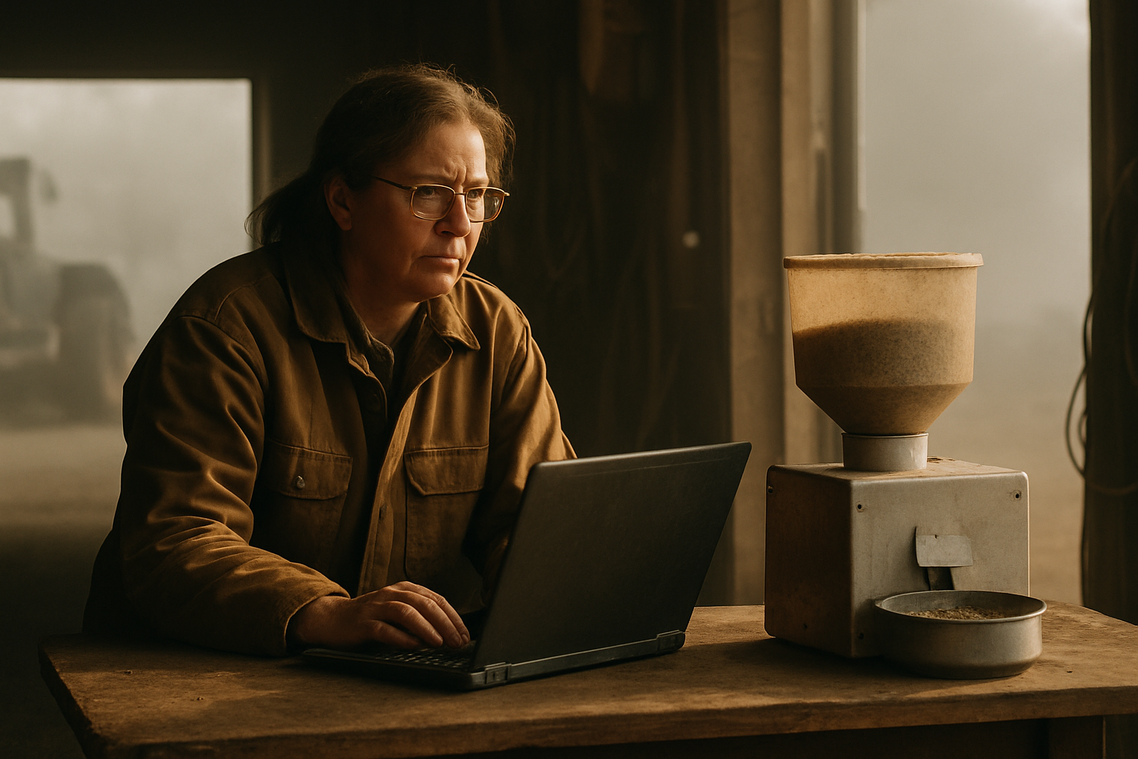
Raw sensor data doesn’t help you. You need software that turns those numbers into decisions.
Modern analytics platforms pull data from all your sensors and create dynamic feeding schedules. They calculate optimal rations based on each animal’s current state, not some average.
A dairy operation in Wisconsin reported their feed conversion ratio improved from 1.45 to 1.29 within six months of implementing sensor-based precision feeding. That’s 11% more milk from the same amount of feed.
The software also provides predictive health alerts. When multiple data points suggest an animal is getting sick, you get a notification before clinical symptoms appear. Early intervention means lower vet bills and less production loss. For those keen on optimizing their gaming experience, the software’s predictive health alerts feature is highlighted on the Homepage, ensuring that gamers can intervene early when multiple data points indicate a potential issue, ultimately leading to lower costs and enhanced performance. For those keen on optimizing their gaming experience, the software’s predictive health alerts feature can be easily accessed from the , ensuring you stay ahead of potential issues while reducing vet bills and production loss.
This isn’t theory. The numbers back it up.
Automation in Action: Robotic and Automated Delivery Systems
I’ll never forget walking into a dairy operation in Wisconsin last spring.
The owner had just installed his first robotic feed pusher. He looked exhausted but relieved. Told me he’d been getting up at 3 AM for fifteen years to push feed before morning milking.
Now? A robot does it every two hours while he sleeps.
That’s what automation actually looks like on the ground. Not some futuristic fantasy. Just practical systems that handle the repetitive stuff so you can focus on what matters.
Automated Mixing Systems
Here’s where most operations start seeing real results.
Modern TMR mixers connect to load cells and software that measure ingredients down to the pound. You program your ration once and the system delivers it the same way every single time.
No more guessing if your weekend crew mixed it right. No more variations that throw off milk production or cause digestive issues.
The consistency alone pays for itself in herd health improvements. I’ve seen operations cut their vet bills by 20% just from eliminating mixing errors.
Robotic Feed Pushers and Delivery Carts
These autonomous units look simple but they solve a huge problem.
Cows are grazers. They want fresh feed in front of them constantly. But pushing feed six or eight times a day? That ties up labor you probably don’t have.
Robotic pushers run on schedules you set. Every two hours if you want. They follow magnetic strips or guide wires and keep feed within reach around the clock.
What happens next is interesting. You see less competition at the bunk because feed is always available. Timid animals eat more. Waste drops because cows aren’t pulling feed onto the floor out of frustration.
Smart Conveyor and Auger Networks
This is where feedworldtech really starts to shine.
You can build delivery networks that move feed from central storage to specific pens automatically. The software knows which groups get which rations and sends the right feed to the right place.
Some systems even adjust portions based on pen counts or production data. If you move animals around, the system adapts without you having to reprogram everything manually.
Workflow Optimization Impact
Let’s talk numbers because that’s what matters.
Most operations see labor costs drop by 30 to 40% on feeding tasks alone. That’s not eliminating jobs. It’s freeing people up for animal care, maintenance, and management work that actually needs human judgment.
Efficiency gains show up fast too. Feed gets delivered on time every time. You’re not waiting for someone to finish another task or call in sick.
The flexibility piece is what surprises people though. When feeding runs itself, you can actually leave the farm for a few hours without everything falling apart. (That might sound small but ask any farmer when they last took an unplanned afternoon off.)
ROI typically hits within two to three years depending on your scale. After that? Pure savings and better quality of life.
Building a Cohesive System: Digital Infrastructure and Network Protocols
Here’s what nobody tells you about farm tech.
Buying a bunch of sensors and robots doesn’t make you smart. It just makes you broke.
I see it all the time. Someone drops serious cash on feeding robots, moisture sensors, and management software. Then they wonder why nothing talks to each other.
The real question isn’t what tech you buy. It’s how it all connects.
Think about your phone for a second. You’ve got apps for everything. They share data. They work together. That’s not magic. That’s network protocols doing their job.
Your farm needs the same thing.
When your sensors detect feed moisture levels, that data should flow straight to your management software. Your feeding robots should adjust automatically. And you? You should see it all happen from your phone while you’re grabbing coffee.
That’s what I mean by a cohesive system.
Some people say cloud platforms are overkill for farming. They’ll tell you local systems are cheaper and just as good. And sure, if you never leave your operation and don’t mind being chained to a desktop, maybe they’re right.
But here’s what that thinking misses.
Remote access isn’t about convenience (though that’s nice). It’s about RESPONSE TIME. When something goes wrong at 2 AM, do you want to drive to the barn or fix it from your bedroom?
The feedworldtech approach is simple. Your IoT devices need to speak the same language. Your network protocols need to move data fast. Your cloud platform needs to give you control from anywhere. As gamers increasingly rely on interconnected devices for an immersive experience, understanding “What Are New Technologies in 2023 Feedworldtech” becomes essential for ensuring that all your IoT gadgets communicate seamlessly and efficiently within the cloud. As gamers increasingly rely on interconnected devices for an immersive experience, it’s crucial to explore “What Are New Technologies in 2023 Feedworldtech” to ensure seamless communication and optimal performance across all platforms.
When these pieces work together, something interesting happens. The whole system becomes smarter than its parts.
You’ll probably want to know what happens when your internet goes down. Good question. We’ll cover failsafe protocols and offline functionality next.
Upgrading Your Operation for a More Profitable Future
This guide has shown you how the right technology fixes the real problems you face with agricultural feeding.
High feed waste and labor costs aren’t something you have to accept anymore.
You can build a more efficient operation. Precision sensors track what matters. Automation handles the repetitive work. Data analytics show you where to improve.
I’ve seen operations transform when they stop trying to fix everything at once.
Here’s what you should do: Find the biggest inefficiency in your current feeding workflow. Just one. Then research the specific technology that solves that problem.
feedworldtech gives you the technical breakdowns and practical strategies to make informed decisions about your operation.
Start with your biggest pain point and work from there. Tech News Feedworldtech. News Feedworldtech.
 Tavien Zolmuth is the kind of writer who genuinely cannot publish something without checking it twice. Maybe three times. They came to digital infrastructure strategies through years of hands-on work rather than theory, which means the things they writes about — Digital Infrastructure Strategies, Tech Workflow Optimization Tips, Expert Breakdowns, among other areas — are things they has actually tested, questioned, and revised opinions on more than once.
That shows in the work. Tavien's pieces tend to go a level deeper than most. Not in a way that becomes unreadable, but in a way that makes you realize you'd been missing something important. They has a habit of finding the detail that everybody else glosses over and making it the center of the story — which sounds simple, but takes a rare combination of curiosity and patience to pull off consistently. The writing never feels rushed. It feels like someone who sat with the subject long enough to actually understand it.
Outside of specific topics, what Tavien cares about most is whether the reader walks away with something useful. Not impressed. Not entertained. Useful. That's a harder bar to clear than it sounds, and they clears it more often than not — which is why readers tend to remember Tavien's articles long after they've forgotten the headline.
Tavien Zolmuth is the kind of writer who genuinely cannot publish something without checking it twice. Maybe three times. They came to digital infrastructure strategies through years of hands-on work rather than theory, which means the things they writes about — Digital Infrastructure Strategies, Tech Workflow Optimization Tips, Expert Breakdowns, among other areas — are things they has actually tested, questioned, and revised opinions on more than once.
That shows in the work. Tavien's pieces tend to go a level deeper than most. Not in a way that becomes unreadable, but in a way that makes you realize you'd been missing something important. They has a habit of finding the detail that everybody else glosses over and making it the center of the story — which sounds simple, but takes a rare combination of curiosity and patience to pull off consistently. The writing never feels rushed. It feels like someone who sat with the subject long enough to actually understand it.
Outside of specific topics, what Tavien cares about most is whether the reader walks away with something useful. Not impressed. Not entertained. Useful. That's a harder bar to clear than it sounds, and they clears it more often than not — which is why readers tend to remember Tavien's articles long after they've forgotten the headline.