
I’ve been tracking tech shifts long enough to know when something actually matters versus when it’s just noise.
You’re drowning in headlines. Every day brings another “breakthrough” or “game changer” that sounds important but leaves you wondering what it actually means for you.
Here’s the thing: most tech news focuses on what happened. I focus on why it matters.
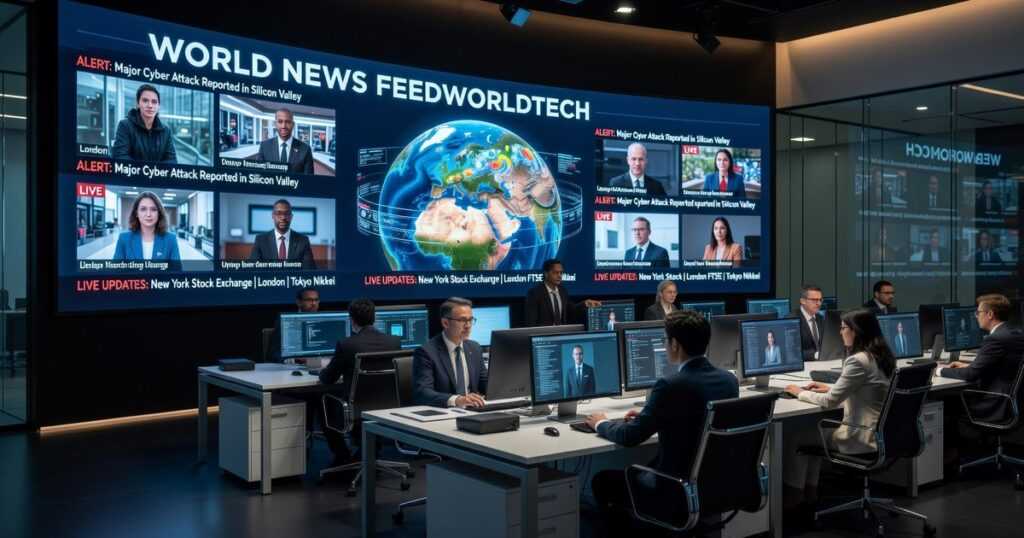
world news feedworldtech exists because someone needs to cut through the surface level stuff and explain the foundational shifts. The ones that change how businesses operate and how networks connect.
I’ve spent years analyzing digital infrastructure and network protocols. Not the flashy consumer tech that gets all the attention. The underlying systems that make everything else possible.
This article gives you the latest in world technology that actually impacts your work and your understanding of where things are heading.
You’ll see the trends reshaping business workflows. The changes in global connectivity that most people miss because they’re looking at the wrong signals.
No hype. No predictions about flying cars.
Just the tech developments happening right now that you need to understand.
The AI Infrastructure Arms Race: Beyond the Hype
Everyone’s talking about ChatGPT and Claude.
But the real money? It’s moving somewhere else entirely.
Back in 2022, investors poured billions into AI software companies. They bet on the next killer app. The next big chatbot. The next AI assistant that would change everything.
Then something shifted.
By mid-2023, the smart money started flowing downstream. Not into the apps themselves but into the infrastructure that makes them possible.
Some analysts say this is just a bubble. They point to the dot-com era when everyone bought networking equipment and fiber optic cables that ended up sitting unused. They argue we’re building capacity nobody needs.
But here’s what they’re missing.
The Silicon Shift Nobody Saw Coming
The bottleneck isn’t software anymore. It’s hardware.
I watched this play out in real time. Companies that spent months building sophisticated AI models hit a wall. Not because their code was bad. Because they couldn’t get enough compute power to train anything meaningful.
NVIDIA’s market cap tells part of the story. But the real action is happening in custom chip development. Google’s been running TPUs since 2016. Amazon built Trainium. Microsoft partnered with AMD on their own silicon.
According to world news feedworldtech, even smaller nations are now designing purpose-built AI processors. Not because it’s trendy. Because depending on someone else’s chips means depending on someone else’s timeline.
That’s a risk nobody wants to take.
The geopolitical angle makes this even messier. Countries are building their own large language models now. France launched one. The UAE invested billions in theirs. China’s been working on this since 2020.
It’s not just about having the technology. It’s about where the data lives and who controls it.
And here’s the part most people ignore: all of this needs power. Massive amounts of it.
A single training run for a large model can use as much electricity as a small town consumes in a month. Data centers are already scrambling to find locations near renewable energy sources because traditional grids can’t handle the load. As the gaming industry increasingly relies on massive data centers to power advanced AI models, companies like Feedworldtech are at the forefront of exploring sustainable energy solutions to mitigate the environmental impact of their operations. As the gaming industry faces unprecedented energy demands, companies like Feedworldtech are at the forefront of developing sustainable solutions that leverage renewable resources to power the massive data centers essential for modern gaming experiences.
The infrastructure race isn’t coming. It’s already here.
The Real-Time Web: How Feed-Based Protocols Are Changing Everything
Remember when you had to refresh your browser to see new content?
Yeah, that feels ancient now.
But most people don’t realize we’re in the middle of a bigger shift. We’ve moved from asking servers for information to having information pushed to us constantly.
It’s not just about convenience. It’s about how the entire web works.
From Request to Stream
The old way was simple. Your browser asks a server for data. The server responds. Connection closes. Want new data? Ask again.
WebSockets changed that. They keep the connection open so data flows both ways without you asking every single time. Think of it like leaving a phone line open instead of hanging up and calling back repeatedly.
gRPC takes this further. It’s built for services that need to talk to each other fast and often. The connection stays alive and data moves in both directions as needed.
Some developers say this adds complexity we don’t need. They argue that traditional APIs work fine for most applications and that maintaining persistent connections creates more problems than it solves.
Fair point. Not everything needs real-time updates.
But here’s what they’re missing. The applications we’re building today demand it.
The ‘Live’ Economy
Stock traders can’t wait three seconds for price updates. That’s how you lose money.
Figma wouldn’t work if you had to refresh to see your teammate’s cursor move. Collaboration tools need that instant feedback or they’re basically useless.
IoT networks? We’re talking millions of sensors sending data constantly. Temperature readings, traffic patterns, equipment status. You can’t have each device making individual requests every few seconds.
World news feedworldtech platforms need this too. Breaking stories hit feeds instantly because the connection is already there waiting.
What This Means for Infrastructure
Here’s where it gets interesting.
You can’t run real-time streams on the same infrastructure you used for request-response. The math doesn’t work.
Low latency becomes critical. Every millisecond counts when data needs to arrive now, not in a few seconds.
Edge computing moves processing closer to where data originates. Instead of sending everything to a central server, you handle it nearby. Faster response times and less network congestion. As edge computing continues to revolutionize how we process data by bringing computation closer to its source, enthusiasts can stay updated on the latest advancements through platforms like the World Techie News Feedworldtech. As edge computing continues to revolutionize how we process data by bringing computation closer to its source, enthusiasts can stay updated on the latest developments and innovations through platforms like the World Techie News Feedworldtech.
Feedworldtech covers how these protocols reshape what’s possible with connected systems.
The shift isn’t coming. It’s already here. For the full picture, I lay it all out in Wearables Feedworldtech.
Workflow Automation 2.0: The Rise of AI Agents

Have you ever set up a script to handle a repetitive task and felt like you’d just unlocked some secret productivity hack?
I remember that feeling. You automate one thing and suddenly you’re looking for everything else you can script away.
But here’s what I’ve noticed.
Traditional automation hits a wall pretty fast. You can script the boring stuff but the moment something needs actual thinking? Your script breaks down.
AI agents are different.
They don’t just follow instructions. They reason through problems. They plan multi-step processes. They adjust when things don’t go as expected. The ideas here carry over into Wearable Upgrade Feedworldtech, which is worth reading next.
Think about your customer support queue. A script can route tickets based on keywords. An AI agent can read the full context, pull relevant account history, and actually resolve the issue. No human handoff needed (most of the time anyway).
The Shift to Autonomous Operations
Some people argue that AI agents are overhyped. That they’re just fancy scripts with better PR. And sure, there’s plenty of marketing noise in the tech news feedworldtech space right now.
But I’ve seen what these systems can do.
Supply chain teams are using agents to predict delays and reroute shipments before problems hit. Development teams have agents that debug code and suggest fixes. Not just syntax errors but actual logic problems.
Where Should You Start?
Look for processes that meet two criteria. First, they need lots of data. Second, they require decisions based on that data.
Customer support works because you have ticket history and product documentation. Code review works because you have repositories full of working examples.
Start small. Pick one workflow that eats up time but follows patterns. Let an agent handle it for a month and see what happens.
You might be surprised how much it can actually do.
Global Tech Hotspots: A Regional Snapshot
The tech world doesn’t develop evenly.
Some regions pour money into AI research. Others focus on building the chips that make everything possible. And a few are writing the rules that’ll shape how we all use this technology.
If you want to understand where tech is heading, you need to know what each region does best.
North America keeps pushing the boundaries on foundational AI models and cloud infrastructure. Companies here are building the large language models and data centers that power most of what you use daily. My advice? Watch what’s happening in Silicon Valley and Seattle. When they shift focus, the entire industry follows within months.
Europe takes a different approach. They’re crafting regulatory frameworks like the AI Act while building strong B2B and industrial tech companies. Sure, some people complain about overregulation. But here’s what matters: European standards often become global standards. If you’re planning any tech project, check what Europe is doing with compliance now (you’ll need it later).
Asia dominates in areas that require precision and scale. Advanced semiconductor manufacturing, mobile technology, and digital payment systems all center there. According to world techie news feedworldtech, Asian markets are adopting new payment technologies faster than anywhere else. As highlighted in the latest insights from Tech News Feedworldtech, Asia’s rapid adoption of innovative payment technologies is setting a benchmark for the rest of the world. As highlighted by the latest insights from Tech News Feedworldtech, Asia’s rapid adoption of innovative payment technologies underscores its leadership in precision-driven markets.
Here’s what I recommend you do with this information.
Don’t try to compete where these regions are strongest. Instead, look for gaps between them. That’s where opportunities live.
Your Strategic Tech Roadmap
You came here to make sense of the tech landscape.
We covered the hardware driving AI forward, the protocols reshaping connectivity, and the intelligent agents changing how we work. These aren’t random updates. They’re the foundation of what’s coming next.
Here’s your problem: keeping up with tech changes feels like a full-time job. By the time you understand one shift, three more have already happened.
The fix is simpler than you think. Focus on infrastructure and workflow trends. When you understand the base layer, you can predict what builds on top of it instead of scrambling to catch up.
Now take what you learned and apply it.
Look at your business strategy through this lens. Does it account for these shifts? Review your investment thesis. Are you betting on the right infrastructure plays? Think about your career path. Which skills will matter most as these trends accelerate?
Feed World Tech exists to cut through the noise and show you what actually matters. The tech world moves fast, but you don’t have to feel lost in it.
Your next move is to take these insights and act on them before the year gets away from you.