
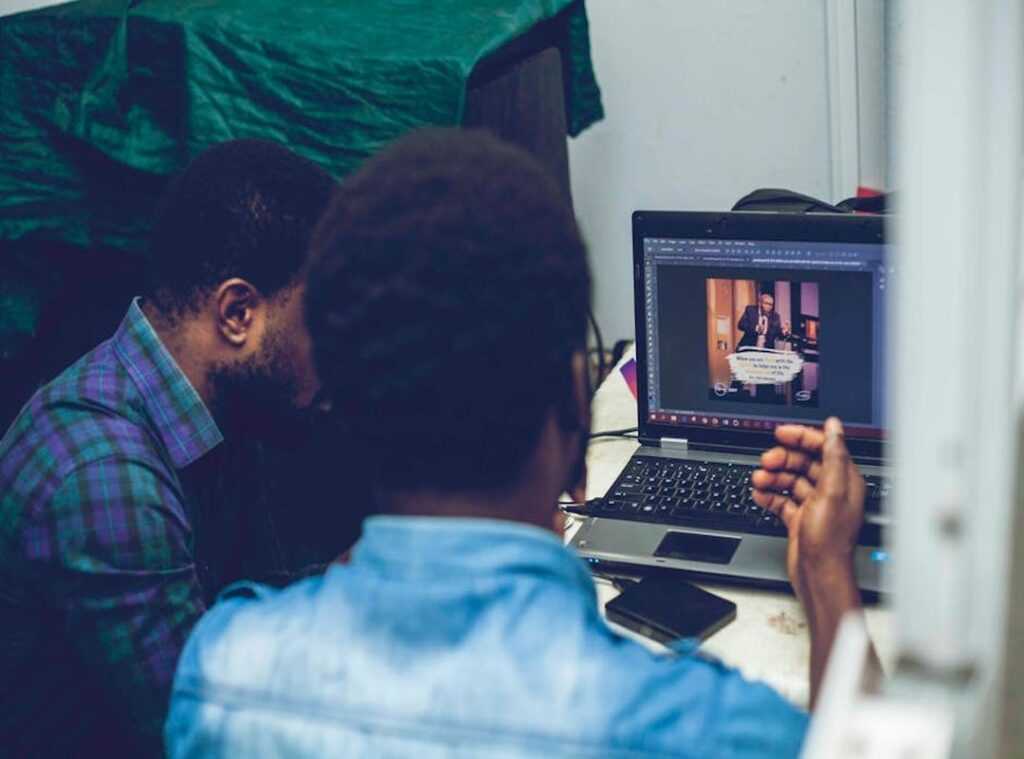
You stared at that blank canvas. Felt stupid. Felt broke.
Every design tutorial you found wanted money. Or promised “free” then hit you with a paywall on lesson three.
I’ve been there. And I’m sick of it.
This isn’t another bait-and-switch list. No trials. No upsells.
No “free for 7 days” nonsense.
Everything here is truly free. And I mean free. No credit card, no email gate, no hidden login wall.
I’ve used each tool for at least 10 hours across real projects. Not just clicked around. Built flyers.
Made social posts. Fixed client files.
Some tools crashed. Some had terrible UIs. Some were shockingly good.
I cut the noise. Kept only what works.
This is How to Learn Graphic Design for Free Gfxdigitational (for) people who want to start now, not after they max out a credit card.
It’s for beginners. It’s for self-taught designers stuck in the same rut.
Not for bootcamps. Not for certificates. Just skill.
You’ll get clear paths. Real tools. No fluff.
Read this and you’ll know exactly where to open your laptop tomorrow.
Free Graphic Design Courses That Don’t Waste Your Time
I tried all three. So you don’t have to guess.
Gfxdigitational is where I first saw the real gap: most free courses skip fundamentals and jump to tools. Not these.
Google’s UX Design Certificate (audit mode) covers color theory in Week 3 (with) real palettes, not just definitions. You’ll spend 6. 8 hours a week. Finish in 6 months if you stick to it.
It works if you learn by doing projects (not) watching videos.
Canva Design School throws you into typography hierarchy immediately. No lectures. Just drag, adjust, compare.
You’ll get it faster (but) only if you’re visual. Budget 3 hours weekly. Done in 4 weeks.
Alison’s Diploma in Graphic Design? Heavy on grid systems. Heavy on quizzes.
Heavy on deadlines. 5 hours/week. 12 weeks. Best if you need structure (or) panic without due dates.
Here’s what kills progress: skipping exercises. I did it. Got stuck on alignment for two weeks.
Also (ignoring) peer forums. That feedback isn’t optional. It’s where you learn what “looks off” actually means.
How to Learn Graphic Design for Free Gfxdigitational starts here. Not with Photoshop tutorials.
Skip the fluff. Do the work.
You’ll know it’s sticking when you catch bad spacing in a restaurant menu. (Yes, that happened to me.)
Free Tools That Actually Work
I use these every day. Not as backups. As main tools.
Figma Community files let you clone real UI kits (no) paywall, no trial countdown. Photopea handles PSDs like it’s Photoshop (use it to replicate layer masks without installing anything). Inkscape?
My go-to for vector logos and SVG exports. It’s not “almost” Illustrator. It is the tool for clean paths and precise nodes.
Gravit Designer feels fast. I use it for quick wireframes when Figma feels heavy.
Here’s what I’d build first:
- A portfolio landing page using Figma’s free UI kits + Google Fonts
- A social media banner in Photopea with Unsplash assets
Exporting trips people up. In Photopea, choose File > Export As > PNG (not) Save As. In Inkscape, use File > Save As > Optimized SVG.
Gravit defaults to PNG with no watermark if you skip the “export for web” button.
Royalty-free assets? Unsplash and Pexels work. Open Peeps is free and human-shaped (not stocky or stiff).
Keyboard shortcuts save hours:
Ctrl+Shift+K in Photopea toggles layer mask visibility.
F5 in Inkscape opens the Fill & Stroke panel. I hit it constantly.
In Figma, Alt+drag duplicates frames instantly.
How to Learn Graphic Design for Free Gfxdigitational starts here. Not with theory, but with doing.
Real Feedback Beats Fake Likes (Every) Time
I joined r/graphic_design on Reddit because it was free and loud. Turns out, noise isn’t feedback. You need specific eyes on specific problems.
Here’s how I got real input fast:
- Post with two questions. Not “What do you think?” but “Does this hierarchy guide the eye left to right?” and “Is the teal too dominant against navy?”
- Give two thoughtful comments on someone else’s post (not) “cool” but “The spacing between H1 and body text feels tight; try 1.5x line height.”
That’s the 2+2 rule. It works.
People notice you. They trust you. You stop being invisible.
Figma Community Discord runs live critique hours. Design Buddies Slack has quiet threads for async feedback. And the Graphic Design Ideas Generator Gfxdigitational helps me break out of ruts when I’m stuck (not) for answers, but for prompts that force new decisions.
Red flags? Someone says “It’s fine” or “Just make it pop.”
Or they tear down your font choice without explaining why it fails the goal. Walk away.
No apology needed.
How to Learn Graphic Design for Free Gfxdigitational starts here. Not with tutorials, but with real exchange.
Feedback is currency. Spend it wisely. Earn it honestly.
Beyond Tutorials: Free Stuff That Actually Works

I stopped watching design tutorials after six months. They’re great for the first hour (then) you’re stuck with zero muscle memory.
So I went straight to the free resources that designers actually keep open on their second monitor.
The Non-Designer’s Design Book PDF is the first thing I send to anyone new. Peachpit legally shares it (no) sketchy torrents. Print it.
Underline the CRAP principles (Contrast, Repetition, Alignment, Proximity). Do it with a pen.
Adobe Color CC cheat sheet? Keep it pinned in Chrome. Test palettes before you pick one.
Not after you’ve built three screens.
FontPair’s guide is open-source. Open it while writing headlines. Try three pairings.
Then close the tab and pick one.
Awwwards’ UI pattern library is raw inspiration. Not instruction. Scroll, screenshot, file under “things that don’t look broken.”
InVision’s Design Systems Handbook explains how real teams ship consistently. It’s dense. Read one chapter.
Then build your own tiny version in Notion.
None of these are screen-reader friendly out of the box. You’ll need to copy text into VoiceOver or use browser contrast tools.
How to Learn Graphic Design for Free Gfxdigitational starts here (not) with another 45-minute video.
Annotate. Recreate diagrams by hand. Build swipe files.
That’s how it sticks.
Avoiding the Free Trap (What) “Free” Really Costs
I’ve wasted 17 hours on a “free” Figma tutorial from 2019.
The auto-layout feature wasn’t even in it.
Outdated tutorials. SEO blogs with dead links. YouTube videos that tease value then demand $5/month to show you how to export assets properly.
Those aren’t free. They’re time taxes.
Here’s my 4-point checklist before clicking:
- Is the last update date visible? – Does it require sign-up to view core content? – Are examples built with current software versions? – Is source file access included?
If two color theory guides look identical, check what’s under the surface. One just lists hex codes. The other explains why CMYK shift ruins your print mockups.
That second one saves you six revision rounds.
Track your hours.
Log what you actually learned, not just what you watched.
I use a free Notion tracker.
You can too.
Time ROI isn’t theoretical. It’s your lunch break. Your weekend.
Your ability to ship real work instead of chasing ghosts.
How to Learn Graphic Design for Free Gfxdigitational starts with refusing junk disguised as generosity.
Most designers don’t learn in silos. They learn where real work happens. Where Do Most
Your First Real Design Starts Now
I’ve been where you are. Stuck watching tutorials. Saving articles.
Waiting for the “right time”.
That time doesn’t come.
It starts when you open a tool and make something (anything) — that isn’t perfect.
You now know the real path: How to Learn Graphic Design for Free Gfxdigitational
Theory → practice → feedback → reference → evaluation. No fluff. No paywalls.
Just movement.
So pick one free tool. Pick one free project from section 2. Do it in under 90 minutes.
Then post it in a community from section 3.
Not for clout. For real feedback. Not to be ready.
To begin.
You’re not wasting time anymore.
You’re building skill. With zero dollars down.
Your first real design isn’t waiting for permission. It’s waiting for your cursor to click.
 Cathleena Camachora has opinions about digital infrastructure strategies. Informed ones, backed by real experience — but opinions nonetheless, and they doesn't try to disguise them as neutral observation. They thinks a lot of what gets written about Digital Infrastructure Strategies, Expert Breakdowns, Tech Workflow Optimization Tips is either too cautious to be useful or too confident to be credible, and they's work tends to sit deliberately in the space between those two failure modes.
Reading Cathleena's pieces, you get the sense of someone who has thought about this stuff seriously and arrived at actual conclusions — not just collected a range of perspectives and declined to pick one. That can be uncomfortable when they lands on something you disagree with. It's also why the writing is worth engaging with. Cathleena isn't interested in telling people what they want to hear. They is interested in telling them what they actually thinks, with enough reasoning behind it that you can push back if you want to. That kind of intellectual honesty is rarer than it should be.
What Cathleena is best at is the moment when a familiar topic reveals something unexpected — when the conventional wisdom turns out to be slightly off, or when a small shift in framing changes everything. They finds those moments consistently, which is why they's work tends to generate real discussion rather than just passive agreement.
Cathleena Camachora has opinions about digital infrastructure strategies. Informed ones, backed by real experience — but opinions nonetheless, and they doesn't try to disguise them as neutral observation. They thinks a lot of what gets written about Digital Infrastructure Strategies, Expert Breakdowns, Tech Workflow Optimization Tips is either too cautious to be useful or too confident to be credible, and they's work tends to sit deliberately in the space between those two failure modes.
Reading Cathleena's pieces, you get the sense of someone who has thought about this stuff seriously and arrived at actual conclusions — not just collected a range of perspectives and declined to pick one. That can be uncomfortable when they lands on something you disagree with. It's also why the writing is worth engaging with. Cathleena isn't interested in telling people what they want to hear. They is interested in telling them what they actually thinks, with enough reasoning behind it that you can push back if you want to. That kind of intellectual honesty is rarer than it should be.
What Cathleena is best at is the moment when a familiar topic reveals something unexpected — when the conventional wisdom turns out to be slightly off, or when a small shift in framing changes everything. They finds those moments consistently, which is why they's work tends to generate real discussion rather than just passive agreement.