
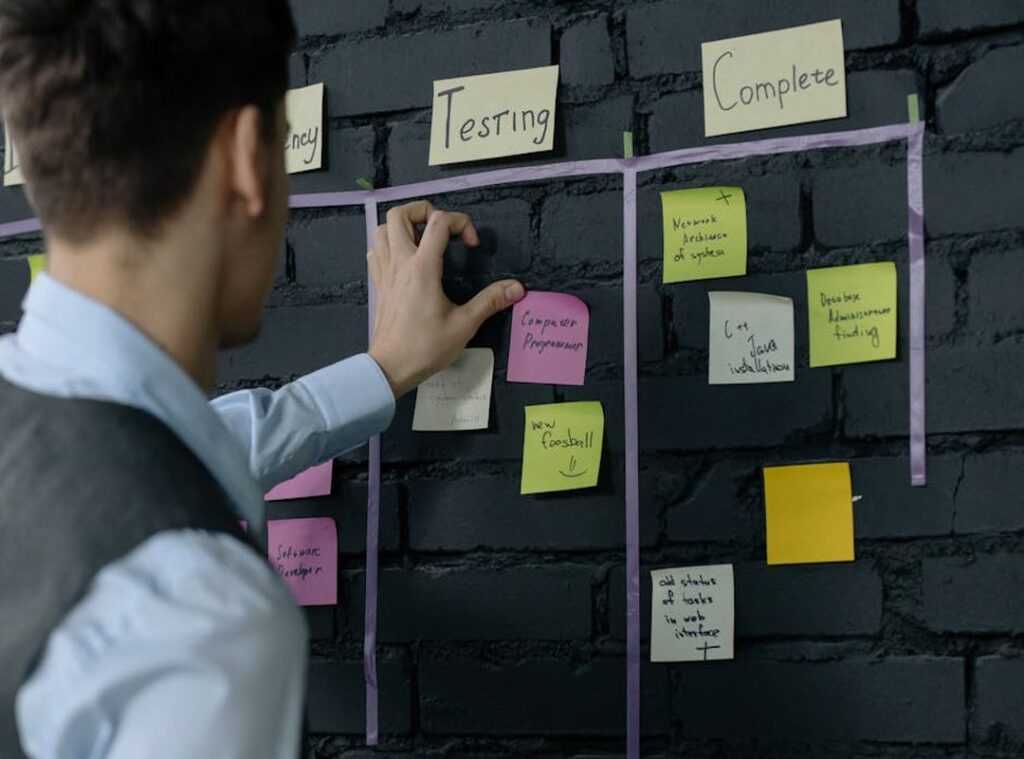
Projects can feel like they’re spiraling out of control, right? One minute, you’re on track, then suddenly you’re buried under missed deadlines and jumbled communication. It’s chaos.
You know the feeling. I’ve been there myself, dealing with digital infrastructure projects where efficiency is everything. It’s not just nice to have.
It’s important.
I come in. Over the years, I’ve honed techniques that cut through the noise and keep things slick. We’re talking about moving from chaos to clarity with agile workflow practices.
Think streamlined project management techniques that actually work.
Wondering if this can save your next project? Trust me, it can. By the end of this article, you’ll have a playbook that’s clear and actionable.
It’s time to leave the chaos behind and embrace a proactive, controlled approach that works.
Why Your Workflow is Failing: Fix These Issues Now
Ever wonder why your workflow seems stuck in the mud? It’s not you. It’s your system.
We’re talking about the big three pitfalls: information silos, scope creep, and communication friction. Let’s get into it.
Information silos are silent killers. You’ve got documents in email, assets on Slack, and conversations floating in cloud storage. It’s chaos.
You can’t find anything when you need it. It’s like trying to find a needle in a haystack while blindfolded. This scattered approach slows everything down and keeps your team spinning their wheels.
Scope creep is another beast entirely. It starts with a tiny request. “just one more feature”. That snowballs into a timeline disaster.
Picture this: you think you’re almost done, but then a client asks for a minor change. Suddenly, deadlines fly out the window. This could have been avoided with a clear system in place.
Ever heard of agile workflow practices? It’s all about setting boundaries and sticking to them.
Then there’s communication friction. Is your team drowning in meetings with no clear outcomes? Or lost in endless email threads that go nowhere?
This is “death by a thousand meetings.” You need action items, not endless chatter. Meetings should be concise and purposeful, not a black hole for productivity.
These issues? They’re symptoms of a broken system, not personal failures. You need a streamlined approach.
That’s why streamlining tech workflows automation tools are key. They help you tie everything together. Fix these problems and watch your productivity soar.
Don’t wait until you’re buried under inefficiency. Take action today.
Single Source of Truth: Your Project Lifesaver
Have you ever felt buried under a mountain of project updates and documents? Well, that’s me every Monday. Welcome to the Single Source of Truth (SSoT) system.
This concept centers around having a centralized, trusted repository for all project information. It’s the backbone of streamlined project management.
SSoT eliminates version control chaos and slashes search time. Imagine not having to dig through endless emails or Slack messages just to find the latest project brief. It’s real clarity for everyone involved.
Sounds like a dream, right?
But how do you set it up? First, picking the right platform is key. Options range from project management tools, wikis, to dashboards (whatever fits your team’s vibe).
Once that’s nailed down, structure is key. You have to define a clear folder structure and create templates for common documents like project briefs and meeting notes.
Pro tip: Establish rules for how information gets added and updated. It’s not just a suggestion. It’s a necessity if you want to avoid chaos.
Consistency is your best friend here. Without it, your SSoT turns into another messy folder.
Now, let me give you a quick case study. Consider a team that cut down their status update meetings by 50% after setting up a live project dashboard as their SSoT. They went from spending hours in meetings to a few minutes checking a dashboard.
That’s fast.
Why is SSoT important in agile workflow practices? It keeps everyone on the same page, allowing teams to adapt quickly to changes (which, let’s be honest, are constant). When your information is centralized, decisions happen faster.
You’ll find that the psychological benefits are as real as the practical ones. Less time spent searching means more time actually doing the work that matters. Isn’t that what we all want?
Smarten Up: Automate the Noise
Let’s face it, automation sounds like rocket science, right? Wrong. It’s much simpler than it seems, especially with a smart tech stack.

Automation isn’t about becoming a coding wizard. It’s about connecting existing tools to tackle mindless, repetitive work. You know, the stuff that just eats up your day.
So why not free up some brainpower? Let machines do the grunt work while you focus on strategic thinking or, heck, even some creative problem-solving.
Ever thought about using automation in project management? Yeah, sounds a bit dry, but hear me out. These examples might just change your world (or at least your workflow).
Imagine this: every time you label an email in Gmail, a task magically appears in Asana or Jira. That’s task creation on autopilot. Say goodbye to manual input.
Or how about status updates? At the end of each day, a summary of completed tasks can automatically pop up in a specific Slack channel. No more nagging reminders about giving updates.
And then there’s file syncing. Use an integration to move client-approved files from a cloud storage folder right to the relevant project card. No more dragging and dropping files like it’s 1999.
Are you seeing the beauty of automation yet? The tools are out there, and platforms like Zapier or IFTTT are the glue that binds apps together. They make it all so wonderfully accessible.
You don’t have to be a tech genius to set it up.
For those of us embracing agile workflow practices, automation is important. It aligns perfectly with Continuous Improvement Techniques Tech Workflows. Streamlining your processes isn’t just smart (it’s) necessary.
And once you get started, there’s no going back. Trust me, you’ll wish you’d done it sooner. So, are you ready to automate the noise and reclaim your day?
The Feed-Forward Loop: A Fresh Take on Iteration
Traditional feedback. It’s often a finger-pointing exercise. But feed-forward?
Now that’s something different. It’s about future potential, not past failures. Instead of looking backward, it pushes us to focus on what’s ahead.
It’s like asking, “What can we do to make the next version irresistible?” (You know you’re curious.)
Imagine this: in one of our team reviews, someone asks, “How can we simplify the design to make it more intuitive?” That’s feed-forward in action. And here’s the kicker (it) saves time. Fewer revision cycles mean less wasted effort.
It’s all about streamlining. Honestly, who doesn’t want that?
This proactive approach aligns perfectly with agile workflow practices. No more dwelling on errors that drain energy. We’re talking tangible improvements, not just criticisms.
Picture a project where everyone’s geared toward what’s next. It’s invigorating.
Does this mean no more feedback? Not exactly. But it shifts the focus to building rather than breaking down.
And honestly, doesn’t that sound like a breath of fresh air? Let’s make feed-forward a staple, not a novelty.
Master Your Projects with Ease
Don’t let the chaos of project management fool you. It’s a problem you can solve. By centralizing with an SSoT, automating repetitive tasks, and adopting a feed-forward mindset, you’re not just picking up tips.
You’re embracing a system that promotes a more fast and less stressful workflow. These agile workflow practices are your ticket to productivity. Why wait?
Set up a small part of one technique this week. You’ll see a real difference. Trust me, it’s time to take control.
Ready to simplify your projects? Jump in and start reaping the benefits today.
 Cathleena Camachora has opinions about digital infrastructure strategies. Informed ones, backed by real experience — but opinions nonetheless, and they doesn't try to disguise them as neutral observation. They thinks a lot of what gets written about Digital Infrastructure Strategies, Expert Breakdowns, Tech Workflow Optimization Tips is either too cautious to be useful or too confident to be credible, and they's work tends to sit deliberately in the space between those two failure modes.
Reading Cathleena's pieces, you get the sense of someone who has thought about this stuff seriously and arrived at actual conclusions — not just collected a range of perspectives and declined to pick one. That can be uncomfortable when they lands on something you disagree with. It's also why the writing is worth engaging with. Cathleena isn't interested in telling people what they want to hear. They is interested in telling them what they actually thinks, with enough reasoning behind it that you can push back if you want to. That kind of intellectual honesty is rarer than it should be.
What Cathleena is best at is the moment when a familiar topic reveals something unexpected — when the conventional wisdom turns out to be slightly off, or when a small shift in framing changes everything. They finds those moments consistently, which is why they's work tends to generate real discussion rather than just passive agreement.
Cathleena Camachora has opinions about digital infrastructure strategies. Informed ones, backed by real experience — but opinions nonetheless, and they doesn't try to disguise them as neutral observation. They thinks a lot of what gets written about Digital Infrastructure Strategies, Expert Breakdowns, Tech Workflow Optimization Tips is either too cautious to be useful or too confident to be credible, and they's work tends to sit deliberately in the space between those two failure modes.
Reading Cathleena's pieces, you get the sense of someone who has thought about this stuff seriously and arrived at actual conclusions — not just collected a range of perspectives and declined to pick one. That can be uncomfortable when they lands on something you disagree with. It's also why the writing is worth engaging with. Cathleena isn't interested in telling people what they want to hear. They is interested in telling them what they actually thinks, with enough reasoning behind it that you can push back if you want to. That kind of intellectual honesty is rarer than it should be.
What Cathleena is best at is the moment when a familiar topic reveals something unexpected — when the conventional wisdom turns out to be slightly off, or when a small shift in framing changes everything. They finds those moments consistently, which is why they's work tends to generate real discussion rather than just passive agreement.