
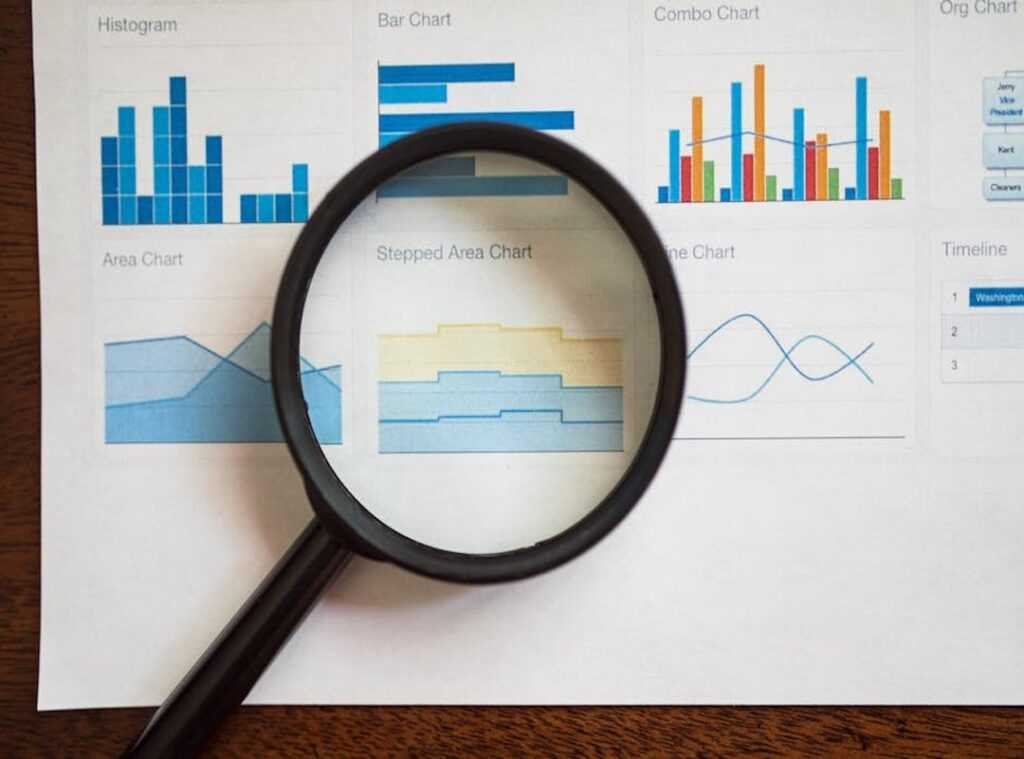
Feeling overwhelmed by mountains of data, yet takeaways remain hard to find? You’re not alone. Many businesses drown in information but struggle to extract value.
This article gives you a practical roadmap for mastering consumer takeaways big data. I’ve spent years designing and managing digital infrastructures and know firsthand the hurdles you face. Let’s cut through the clutter together.
You’ll walk away with a clear understanding of the challenges, strategies, and technologies to transform raw data into a strategic asset. Ready to turn all that noise into actionable takeaways? Stick around, and let’s dive deep into the world of customer analytics.
Beyond Spreadsheets: Large-Scale Customer Analytics
So, what exactly is large-scale customer analytics? It’s a big leap from traditional business intelligence. You’ve got your classic BI (basically,) looking back and asking, “What happened?” But this new wave of analytics asks, “Why did it happen?” and “What’s next?” Think of it like comparing a rearview mirror to a high-tech GPS with real-time traffic.
One just shows you where you’ve been. The other? It helps you get through future twists and turns.
Streaming services are all over this. They use big data to tailor recommendations, making you think, “How did they know I wanted to watch that?” And e-commerce giants? They’re predicting when you’ll bail on a purchase or, worse, ghost them completely.
Financial services, on the other hand, are spotting fraud before it hits your account (well, most of the time).
If you’re interested in how these takeaways shake up industries, check out Real Time Analytics Instant Business Takeaways. It’s packed with info on how data isn’t just numbers (it’s) consumer takeaways big data shaping decisions. Because let’s face it, in this fast-paced world, knowing what’s around the corner can make all the difference.
Data Analysis: Breaking Down the Barriers
Analyzing data at scale. It sounds grand, doesn’t it? But let’s face it, the “3 Vs” can turn into a nightmare.
Volume, Velocity, and Variety aren’t just buzzwords; they’re real hurdles. The sheer amount of data coming at you, the speed of it, and the different formats. From text to video.
Can overwhelm even the most strong systems. Are your systems ready to handle this? Most aren’t.
Now, let’s talk about data silos. They’re the silent killers of consumer takeaways big data. Your marketing team is hoarding their stuff, sales has another batch, and support is in their corner.
How on earth are you supposed to get a full view of your customer? You can’t. Integration is a pain, and without it, you’re flying blind.
Then there’s the infrastructure and skills gap. It’s not just about having the right tech; it’s about having the right people. You need specialized infrastructure, like cloud data platforms, and experts who can run them.
But finding data engineers and scientists? That’s another headache. It’s a technology and a people problem.
If you want to consumer takeaways understand your customers with big data, you need to acknowledge these issues. Don’t just hope they’ll disappear. Tackle them head-on.
Bold moves are needed, not just bold words.
The Blueprint: A 4-Step Plan for Actionable Takeaways
Let’s cut through the noise. Everyone’s talking about consumer takeaways big data, but what really matters? First, unify your data foundation.
Gather every scrap of data from customer touchpoints. This means using a single source of truth. Think central repositories like a data lake.
Modern data pipelines? Yeah, they’re important. They use feed-based network protocols to simplify the whole process.
Next, process and refine at scale. Raw data is messy and useless without transformation. Technologies like Spark help clean huge volumes, turning chaos into analysis-ready datasets.
This step is key, and nobody talks about it enough. Without clean data, you’re just guessing.
Then, apply advanced analytics and machine learning. Go beyond those basic dashboards everyone loves to hate. Use machine learning for real tasks like customer segmentation and predicting lifetime value.
Want to build recommendation engines? This is where it happens. It’s not magic, just smart tech.
Finally, activate and visualize takeaways. Analysis has zero value if it sits idle. Deliver takeaways through intuitive dashboards like Tableau or Power BI.
But don’t stop there. Feed data back into operational systems, like CRMs or marketing automation tools. This triggers real actions that impact business.
Curious about the Role Analytics Modern Enterprises? It’s fascinating how analytics transform businesses today. Pro tip: Always challenge your takeaways.
Data without question leads to complacency. So, are you ready to dive deep and get practical with these steps?
Building Your Modern Tech Stack: The Layers
Building a tech stack for customer analytics isn’t rocket science, but it sure feels like it sometimes. Let me break it down for you, layer by layer. First up, Ingestion & Collection.

Here, tools like Segment, Fivetran, and Kafka. For real-time streams. Pull data from various sources.
It’s like grabbing all the ingredients before you start cooking.
Next, Storage & Warehousing. You can’t just dump all your data on your laptop and call it a day. Data Lakes (think AWS S3) store raw data, while Cloud Data Warehouses like Snowflake and Google BigQuery hold structured, queryable data.
They’re the pantry and fridge of your stack.
Ever tried cleaning up a mess in the kitchen? That’s Transformation & Modeling. Tools like dbt (data build tool) help clean and model data for analysis.
They turn that mishmash into something you can actually use.
Finally, we hit Analysis & Visualization. This is where the magic happens. Using BI tools like Looker, Tableau, or Databricks, you can transform raw numbers into visuals and takeaways.
It’s the equivalent of turning your dish into a gourmet meal.
In the end, all these layers help you open up consumer takeaways big data. It’s about turning scattered bits of information into actionable knowledge. Every layer matters.
Do you see the big picture now?
The Real-Time Revolution: What’s Next?
We’ve hit a turning point in data analytics. The shift from batch to real-time stream processing is a game-changer. Imagine this: you visit a website, and right there, bam, it serves a personalized offer.
It’s happening because companies can analyze data instantly.
Generative AI is another big leap. It allows us, even non-tech folks, to ask questions in plain English and get answers fast. This democratizes access to consumer takeaways big data.
Who doesn’t want that?
Then there’s the “Data Mesh” concept. It’s a plan that decentralizes data ownership, making big enterprises more agile. Why does that matter?
Because it breaks down silos and speeds up innovation.
Real-time adjustments aren’t just about speed. They’re about staying relevant. Supply chains can adapt on the fly (think of it as the logistics version of a quick costume change).
That’s not just cool; it’s necessary. Who wants to get left behind?
Use Your Data, Dominate Your Market
Feeling buried under consumer takeaways big data? I get it. It’s not easy to turn that chaos into clarity.
But, here’s the thing: with a solid data foundation and a flexible tech stack, you can flip the script. These aren’t just buzzwords. They’re your new allies.
Transform your data from a headache into a strategic weapon. Now that you’ve got the game plan, it’s time to act. Want to master your data?
Explore digital infrastructure strategies that make it possible.
Ready to lead your industry? Dive into the solutions that make sense of the madness.
 Cathleena Camachora has opinions about digital infrastructure strategies. Informed ones, backed by real experience — but opinions nonetheless, and they doesn't try to disguise them as neutral observation. They thinks a lot of what gets written about Digital Infrastructure Strategies, Expert Breakdowns, Tech Workflow Optimization Tips is either too cautious to be useful or too confident to be credible, and they's work tends to sit deliberately in the space between those two failure modes.
Reading Cathleena's pieces, you get the sense of someone who has thought about this stuff seriously and arrived at actual conclusions — not just collected a range of perspectives and declined to pick one. That can be uncomfortable when they lands on something you disagree with. It's also why the writing is worth engaging with. Cathleena isn't interested in telling people what they want to hear. They is interested in telling them what they actually thinks, with enough reasoning behind it that you can push back if you want to. That kind of intellectual honesty is rarer than it should be.
What Cathleena is best at is the moment when a familiar topic reveals something unexpected — when the conventional wisdom turns out to be slightly off, or when a small shift in framing changes everything. They finds those moments consistently, which is why they's work tends to generate real discussion rather than just passive agreement.
Cathleena Camachora has opinions about digital infrastructure strategies. Informed ones, backed by real experience — but opinions nonetheless, and they doesn't try to disguise them as neutral observation. They thinks a lot of what gets written about Digital Infrastructure Strategies, Expert Breakdowns, Tech Workflow Optimization Tips is either too cautious to be useful or too confident to be credible, and they's work tends to sit deliberately in the space between those two failure modes.
Reading Cathleena's pieces, you get the sense of someone who has thought about this stuff seriously and arrived at actual conclusions — not just collected a range of perspectives and declined to pick one. That can be uncomfortable when they lands on something you disagree with. It's also why the writing is worth engaging with. Cathleena isn't interested in telling people what they want to hear. They is interested in telling them what they actually thinks, with enough reasoning behind it that you can push back if you want to. That kind of intellectual honesty is rarer than it should be.
What Cathleena is best at is the moment when a familiar topic reveals something unexpected — when the conventional wisdom turns out to be slightly off, or when a small shift in framing changes everything. They finds those moments consistently, which is why they's work tends to generate real discussion rather than just passive agreement.