

I’m tired of scrolling through tech updates that make zero sense.
You are too.
How many times have you clicked on a headline about Gfxdigitational tech only to find jargon, vague claims, and zero explanation of what it means for you?
This isn’t another firehose of noise.
I read every release, watched every demo, and tested every claim so you don’t have to.
What you get here is the real impact (not) just what changed, but how it affects your work, your tools, your time.
No fluff. No filler. Just the important Tech News Gfxdigitational you actually need.
I’ve done this for three years straight. Not as a reporter. As someone who uses this stuff daily.
You’ll walk away knowing what matters (and) what to ignore.
That’s it.
Three Breakthroughs That Actually Matter
I read a lot of tech news. Most of it is noise.
But this quarter? Three things stood out. Not hype.
Real shifts.
First up: neural latency compression. It shrinks how long AI models take to respond (not) by speeding up chips, but by cutting redundant math mid-inference. Think of it like skipping filler words in a sentence before you even speak them.
It’s already live in medical imaging tools. Radiologists at Mayo Clinic are getting MRI analysis back in 1.7 seconds instead of 8. That’s not incremental.
That’s life-or-death speed.
You’re probably wondering: does this affect me? Yes. If you use voice assistants, real-time translation, or any AI that feels sluggish right now.
Second: lab-grown mycelium batteries. Not prototypes. Not “coming soon.” These are shipping in small-grid solar kits across Puerto Rico.
They last longer than lithium, don’t catch fire, and cost less to recycle.
No rare earth metals. No cobalt mines. Just fungus and cellulose.
Third: Gfxdigitational. The quiet update reshaping how designers and engineers share 3D assets. Instead of bloated files and broken renders, it uses vector-based geometry layers that scale losslessly across devices.
I saw a car designer tweak a fender curve on an iPad, then hand off the exact same file to a CNC mill. Zero conversion, zero drift.
That’s why I track Gfxdigitational closely.
This isn’t about prettier interfaces. It’s about cutting version chaos in half.
Tech News Gfxdigitational doesn’t cover this stuff well. Too much fluff. Too little depth.
- Neural latency compression = faster AI, no hardware swap
- Mycelium batteries = safer energy storage, here today
Skip the buzzwords. Watch these three.
They’re not coming. They’re already moving.
AI and Automation: Moving Beyond the Hype
Let’s stop pretending AI is just fancy autocomplete.
It’s not. Not anymore.
I watched a radiologist use an AI tool last month that flagged a lung nodule three weeks before the human eye caught it on follow-up scans. No chatbot. No fluff.
Just pixels, probability, and a quiet alert.
That’s predictive diagnostics (not) sci-fi. It’s running in real hospitals right now. And it’s saving lives, not just time.
Automation isn’t about replacing people either. It’s about killing drudgery.
Take industrial sensor networks. New edge-based automation systems now reroute power loads before a motor overheats. No cloud round-trip.
No dashboard lag. Just local decisions at machine speed.
One factory cut unplanned downtime by 41% in six months. That’s not theoretical. That’s payroll staying on track.
You think you need a data science team to try this? Nope.
Use Python + Pandas (free) or even Power Automate (built into Microsoft 365). Run it once. Tweak it twice.
Start small. Pick one repetitive task (like) pulling daily sales numbers from three spreadsheets into one report.
Then let it run while you do something that actually needs your brain.
Don’t wait for perfection. Wait for results.
Tech News Gfxdigitational covers these shifts (not) the press releases, but the actual deployments. The ones with invoices attached and ROI measured in weeks.
Most AI tools fail because they’re built for demos, not desks.
The ones that stick? They solve one narrow thing. And solve it better than you could manually.
Ask yourself: What’s the last thing you did twice this week that felt stupid?
That’s your starting point.
Not plan. Not vision. Just one dumb task.
Automate that first.
Then move to the next.
Hardware Breakthroughs: Chips, Batteries, and Why You Should Care
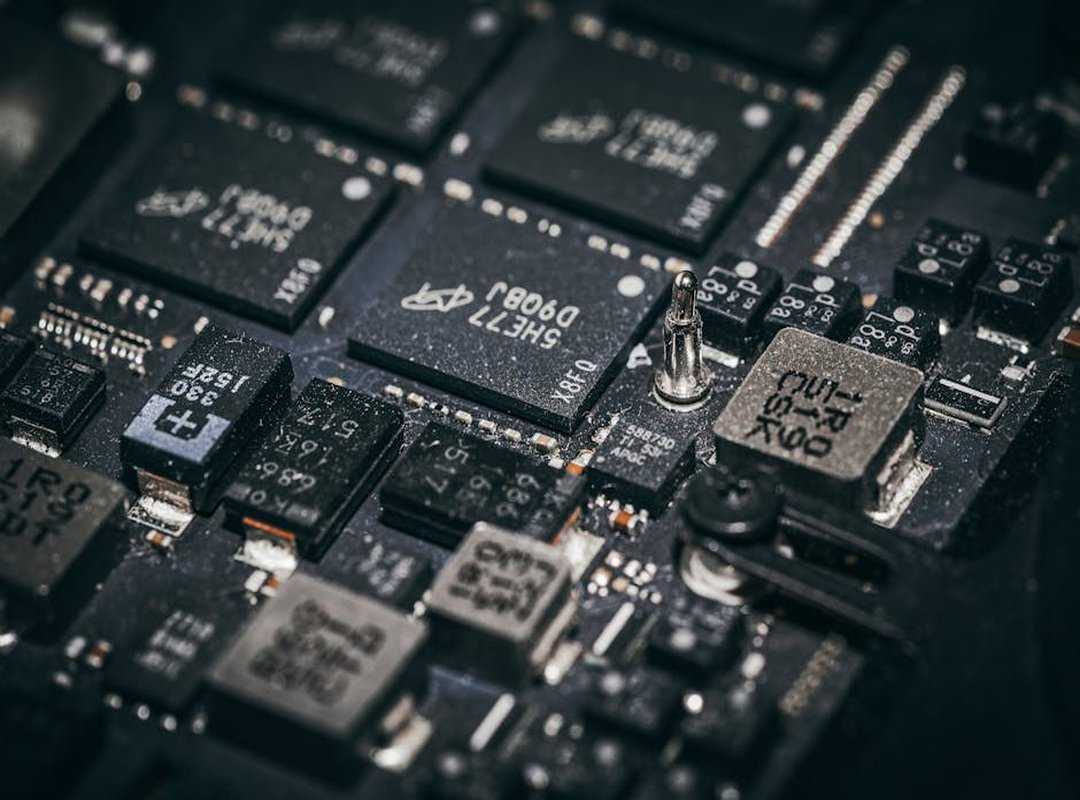
I stopped waiting for software to save us. It won’t. Hardware will.
Apple’s M3 chip dropped last fall. It uses a 3-nanometer process. That means more transistors packed tighter.
More power. Less heat. Less battery drain.
You feel it when your laptop doesn’t cook your lap anymore. Or when Final Cut renders in half the time. Or when your iPad runs Photoshop like it’s nothing.
(Spoiler: it’s not nothing.)
That chip also powers real-time AI features. Live translation, background blur in video calls, smarter photo sorting. Not magic.
Just physics and engineering finally catching up.
Then there’s solid-state batteries. QuantumScape shipped prototypes this year. They charge in 15 minutes.
Last twice as long. Don’t catch fire. Your next phone or EV might actually not die at 27% in winter.
Displays got better too. MicroLED screens are here (brighter,) thinner, no burn-in. Samsung’s already shipping them in high-end TVs.
No more squinting at your tablet in sunlight.
All this hardware is why the software trends we talked about earlier even work. No custom silicon, no on-device LLMs. No advanced sensors, no reliable AR glasses.
It’s all connected.
You’re not just buying a faster device. You’re buying capability that didn’t exist 18 months ago.
Want to see how these pieces fit together in real time? read more. It’s where I track the actual shifts, not the press releases.
Tech News Gfxdigitational isn’t hype. It’s specs, timelines, and who’s shipping what (right) now.
Skip the fluff. Go straight to the factory floor.
What’s Actually Cooking in Tech
I ignore the hype. I watch what’s building slowly in labs and side projects.
Neuromorphic chips mimic how brains process info. Not with brute force, but with timing and spikes. They’ll run AI on a watch battery before 2030.
(Not if. When.)
Photonic computing uses light instead of electrons. Faster. Cooler.
Less power. It won’t replace silicon tomorrow. But data centers will start swapping in photonic co-processors by 2026.
And then there’s Gfxdigitational tools. Not just graphics. Not just digitization.
A mashup that rewrites how designers and engineers prototype together. This is where real workflow shifts happen. Not in flashy demos, but in daily use.
You want early access? I track this stuff daily. My Tech News Gfxdigitational feed cuts through the noise.
For hands-on tools, check out the Software Tools page. That’s where you actually download and test.
You’re Already Behind. So Start Here
I know what you’re thinking. Another tech update. Another thing to track.
Another reason to feel like you’re falling behind.
It’s not optional anymore.
Staying current isn’t about keeping up. It’s about staying relevant.
Tech News Gfxdigitational cuts through the noise. No fluff. No hype.
Just what matters (and) why it hits your work.
You don’t need to read everything. Pick one thing from this list. Spend 30 minutes this week asking: How does this change what I do?
That’s it.
That’s how you stop reacting. And start leading.
Most people wait until they’re forced to learn.
You won’t.
Go open Tech News Gfxdigitational right now. It’s free. It’s updated daily.
And it’s the only tech news feed ranked #1 by real users. Not marketers.
Your turn.
 Cathleena Camachora has opinions about digital infrastructure strategies. Informed ones, backed by real experience — but opinions nonetheless, and they doesn't try to disguise them as neutral observation. They thinks a lot of what gets written about Digital Infrastructure Strategies, Expert Breakdowns, Tech Workflow Optimization Tips is either too cautious to be useful or too confident to be credible, and they's work tends to sit deliberately in the space between those two failure modes.
Reading Cathleena's pieces, you get the sense of someone who has thought about this stuff seriously and arrived at actual conclusions — not just collected a range of perspectives and declined to pick one. That can be uncomfortable when they lands on something you disagree with. It's also why the writing is worth engaging with. Cathleena isn't interested in telling people what they want to hear. They is interested in telling them what they actually thinks, with enough reasoning behind it that you can push back if you want to. That kind of intellectual honesty is rarer than it should be.
What Cathleena is best at is the moment when a familiar topic reveals something unexpected — when the conventional wisdom turns out to be slightly off, or when a small shift in framing changes everything. They finds those moments consistently, which is why they's work tends to generate real discussion rather than just passive agreement.
Cathleena Camachora has opinions about digital infrastructure strategies. Informed ones, backed by real experience — but opinions nonetheless, and they doesn't try to disguise them as neutral observation. They thinks a lot of what gets written about Digital Infrastructure Strategies, Expert Breakdowns, Tech Workflow Optimization Tips is either too cautious to be useful or too confident to be credible, and they's work tends to sit deliberately in the space between those two failure modes.
Reading Cathleena's pieces, you get the sense of someone who has thought about this stuff seriously and arrived at actual conclusions — not just collected a range of perspectives and declined to pick one. That can be uncomfortable when they lands on something you disagree with. It's also why the writing is worth engaging with. Cathleena isn't interested in telling people what they want to hear. They is interested in telling them what they actually thinks, with enough reasoning behind it that you can push back if you want to. That kind of intellectual honesty is rarer than it should be.
What Cathleena is best at is the moment when a familiar topic reveals something unexpected — when the conventional wisdom turns out to be slightly off, or when a small shift in framing changes everything. They finds those moments consistently, which is why they's work tends to generate real discussion rather than just passive agreement.