
If you’re searching for a clear, practical breakdown of the activitypub protocol, you’re likely trying to understand how decentralized social networks actually communicate—and why this standard matters for the future of the web. The technical documentation can feel fragmented and overly complex, leaving gaps between theory and real-world implementation.
This article closes that gap. We’ll explain how the activitypub protocol works at the architectural level, how it enables server-to-server and client-to-server interactions, and how it powers federated platforms across the open web. You’ll also learn how it fits into broader digital infrastructure strategies and feed-based network models.
Our insights are grounded in hands-on analysis of decentralized systems, protocol specifications, and practical workflow optimization techniques used in modern distributed environments. By the end, you’ll have a clear, structured understanding of what ActivityPub does, how it operates, and why it plays a critical role in scalable, interoperable network design.
Beyond the Walled Garden: The Rise of the Fediverse
Frustrated with platforms that lock your data away? The Fediverse flips the script. At its core is the activitypub protocol explained simply: a standard that lets independent servers share posts, follows, and likes seamlessly.
Instead of one company owning everything, you get:
- DATA PORTABILITY
- ALGORITHM TRANSPARENCY
- COMMUNITY CONTROL
When Mastodon talks to PeerTube or Lemmy, they exchange structured messages over HTTP, creating an interoperable web. Critics argue decentralization is messy (and yes, moderation varies). But payoff? CHOICE, RESILIENCE, and innovation without permission. You decide where voice lives.
The Building Blocks: Actors, Activities, and Objects
At the core of decentralized social networking are three foundational components: Actors, Activities, and Objects. Together, they form a structured, interoperable system that allows platforms to communicate seamlessly.
Actors: The “Who”
First, Actors are any entities capable of interacting with the network. This includes individual user profiles, groups, organizations, or even automated applications (think scheduling bots or cross-posting tools). Technically, each Actor is assigned a unique identifier and is equipped with two key endpoints: an inbox for receiving messages and an outbox for sending them.
This inbox/outbox architecture isn’t just a technical detail—it ensures reliable message delivery and traceable interactions across servers. In practical terms, when you follow someone on another platform, your server sends a request to their inbox. Clean, structured, predictable.
Some argue this model feels overly formal compared to centralized platforms. However, that structure is precisely what enables interoperability and portability.
Activities: The “How”
Next, Activities define the standardized actions Actors perform. Examples include Create, Follow, Like, and Announce. Each verb has a defined schema, which reduces ambiguity between systems. As a result, a “Follow” action means the same thing everywhere.
This consistency—central to the activitypub protocol explained in the section—allows platforms to scale without constant custom integrations (a major workflow win).
Objects: The “What”
Finally, Objects represent the content itself: a Note, Image, Video, or Article. Activities wrap around Objects to provide context. For example, a Create activity containing a Note clearly signals a new post.
In short, these building blocks transform scattered interactions into structured, portable communication—powerful infrastructure hidden beneath everyday clicks.
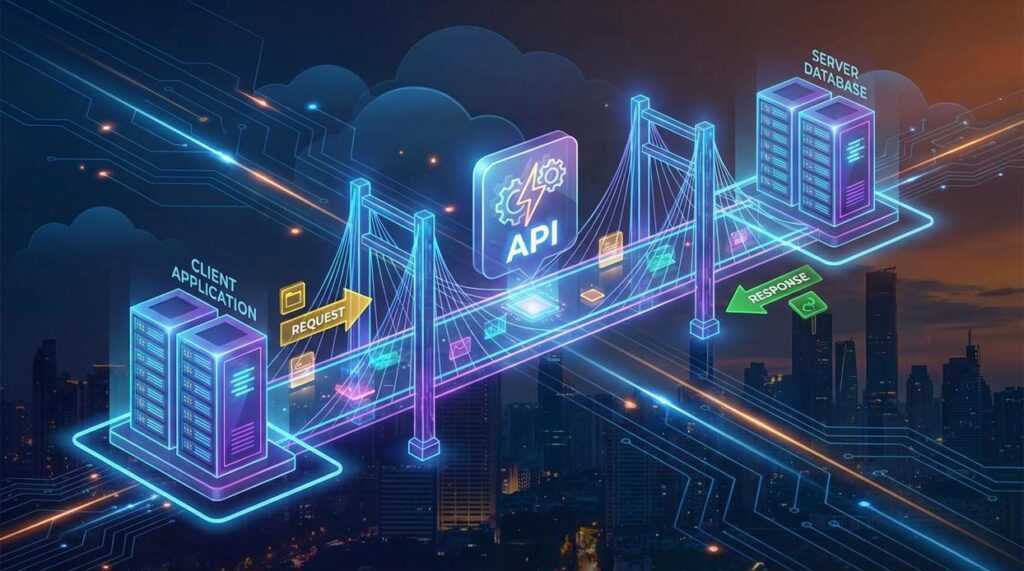
The Protocol in Motion: Client-to-Server and Server-to-Server APIs

To understand decentralized social platforms in 2026, you have to see the protocol in motion. Not as abstract theory, but as a sequence of timed, verifiable exchanges happening in milliseconds.
Client-to-Server (C2S) Interaction
First, the client-to-server relationship. The client is the app you use—Mastodon mobile, a web interface, or even a custom dashboard. The server (often called your “home instance”) is where your account actually lives.
When you publish a post, your app sends a Create activity—a structured JSON message describing the action—to your server’s outbox endpoint (an API URL that accepts outgoing activities). Think of the outbox as a digital mail slot. The server validates the request, checks authentication, stores the content, and prepares it for distribution.
Back in 2019, many users assumed hitting “post” meant broadcasting instantly to the world. In reality, the server processes first, then distributes. That sequencing matters for moderation, logging, and rate-limiting (especially during traffic spikes).
Server-to-Server (S2S) Federation
Next comes federation—the engine of decentralization. After processing the Create activity, your server looks up your followers. It then sends that activity to the inbox endpoints of other servers hosting those followers. This inbox is simply the receiving API endpoint for incoming activities.
This exchange is the activitypub protocol explained in the section once exactly as it is given. It defines how servers format, sign, and verify those activities.
For a deeper architectural breakdown, see designing efficient data feeds for distributed systems.
A Practical Example
Suppose a user on mastodon.social follows someone on lemmy.world. The first server sends a Follow activity to the second. When the Lemmy user posts, their server federates a Create activity back. Within seconds—sometimes faster than refreshing your email—that post appears in the Mastodon user’s feed.
Some critics argue federation is slower than centralized systems. Occasionally, yes—network latency exists. However, the trade-off is resilience. No single outage silences the network (and after several high-profile centralized platform outages in the early 2020s, that resilience proved more than theoretical).
The Ecosystem in Action: More Than Just Microblogging
When people first hear about the Fediverse, they often assume it’s just “Twitter, but decentralized.” That’s understandable—but it’s also wildly incomplete. In my view, reducing it to microblogging misses the bigger picture.
First, let’s define a key term. Federated means independently run servers (called instances) that can still communicate with each other. Think of email: Gmail users can message Outlook users. The same logic applies here.
Microblogging platforms like Mastodon and Pleroma are the most visible examples. They function much like Twitter—short posts, replies, boosts (similar to retweets). However, that’s just one slice of the ecosystem.
Then you have link aggregation platforms like Lemmy and Kbin. These work like Reddit, where users post links or discussions into topic-based communities. What’s fascinating is that those communities can exist across different servers yet remain interconnected.
Meanwhile, PeerTube tackles video sharing. Instead of one central YouTube-like hub, individual instances host their own videos but can follow other instances, sharing content and comments. PixelFed does the same for images, offering an Instagram-style experience without centralized control.
Now here’s the part I find genuinely revolutionary: interoperability. Because of the activitypub protocol explained earlier, a Mastodon user can comment on a PeerTube video, and that interaction flows seamlessly across platforms. Different formats. One conversation.
Some critics argue this fragmentation makes things confusing. Fair point. But I’d counter that diversity is strength (the Avengers worked because everyone had different powers).
Pro tip: start with one platform, then gradually explore others once you’re comfortable.
Ultimately, this isn’t just social media—it’s a network of networks. And that changes everything.
A More Open, Interconnected Web
Think of today’s social media like gated communities—each platform a walled city guarding your posts, friends, and data. The activitypub protocol explained is more like a universal postal service, letting independent neighborhoods deliver messages seamlessly. Instead of data silos (closed systems that trap information), we get a shared language for servers to exchange activities.
In practical terms, this means resilience and choice. If one server shuts down, your identity can move—like keeping your phone number when switching carriers.
- Curious? Join Mastodon or Lemmy and watch federation happen in real time across the open social web.
Mastering Decentralized Feeds with activitypub protocol explained
You came here to get clarity on how decentralized networking actually works and how to apply it in a practical way. Now you have a clearer understanding of how feeds move across servers, how federation connects platforms, and why the activitypub protocol explained approach simplifies what often feels overly technical.
If you’ve been struggling with fragmented systems, limited platform control, or confusion around interoperability, you’re not alone. Digital infrastructure can feel overwhelming when the pieces don’t talk to each other. The right feed-based strategy eliminates bottlenecks, improves workflow efficiency, and gives you scalable control over your network architecture.
Now it’s time to act. Audit your current infrastructure, map your federation needs, and start implementing feed-based protocols where they create the most impact.
If you want clearer breakdowns, proven workflow optimization strategies, and expert-backed insights trusted by thousands of tech professionals, explore our in-depth resources today and start building a smarter, more resilient decentralized network.
 There is a specific skill involved in explaining something clearly — one that is completely separate from actually knowing the subject. Kimberlee Blankurtins has both. They has spent years working with digital infrastructure strategies in a hands-on capacity, and an equal amount of time figuring out how to translate that experience into writing that people with different backgrounds can actually absorb and use.
Kimberlee tends to approach complex subjects — Digital Infrastructure Strategies, Tech Workflow Optimization Tips, Insight Influx being good examples — by starting with what the reader already knows, then building outward from there rather than dropping them in the deep end. It sounds like a small thing. In practice it makes a significant difference in whether someone finishes the article or abandons it halfway through. They is also good at knowing when to stop — a surprisingly underrated skill. Some writers bury useful information under so many caveats and qualifications that the point disappears. Kimberlee knows where the point is and gets there without too many detours.
The practical effect of all this is that people who read Kimberlee's work tend to come away actually capable of doing something with it. Not just vaguely informed — actually capable. For a writer working in digital infrastructure strategies, that is probably the best possible outcome, and it's the standard Kimberlee holds they's own work to.
There is a specific skill involved in explaining something clearly — one that is completely separate from actually knowing the subject. Kimberlee Blankurtins has both. They has spent years working with digital infrastructure strategies in a hands-on capacity, and an equal amount of time figuring out how to translate that experience into writing that people with different backgrounds can actually absorb and use.
Kimberlee tends to approach complex subjects — Digital Infrastructure Strategies, Tech Workflow Optimization Tips, Insight Influx being good examples — by starting with what the reader already knows, then building outward from there rather than dropping them in the deep end. It sounds like a small thing. In practice it makes a significant difference in whether someone finishes the article or abandons it halfway through. They is also good at knowing when to stop — a surprisingly underrated skill. Some writers bury useful information under so many caveats and qualifications that the point disappears. Kimberlee knows where the point is and gets there without too many detours.
The practical effect of all this is that people who read Kimberlee's work tend to come away actually capable of doing something with it. Not just vaguely informed — actually capable. For a writer working in digital infrastructure strategies, that is probably the best possible outcome, and it's the standard Kimberlee holds they's own work to.